Eleanor Roosevelt Quotes
The Supreme Court has handed down a momentous decision. It has told the realty people that no court in this country can uphold a restrictive covenant which prevents anyone from living in a house or on land which he has bought.
Incredibly enough, until this Supreme Court Decision, bigots would sell a home on the open market and write into the deed that the house may never be sold to a Black, a Jew, a Mormon, or any other person one of the owners did not like. This was actually enforced by American courts trying to preserve segregation in housing until 1948 and the 1956 decision stopped the practice but housing segregation persisted by other means.
Eleanor Roosevelt, 1884-1962, First Lady (Franklin Delano Roosevelt), U. S. Delegate to the United Nations, Newspaper Column, My Day, March 17, 1956
Sourced by: Eigen's Political and Historical Quotations

The case was Shelley v. Kraemer where the Supreme Court outlawed discriminatory restrictive covenants A restrictive covenant was a condition that was written into the deed on a piece of property. Even if the owner of the home did not want to discriminate, the previous owners who wrote the restrictive covenant into the deed (or his relatives and heirs) could sue and invalidate the sale. In many cases, insurance would not sell title insurance or banks would not give mortgages for a Black or a Jew where there was a covenant in the deed, even if the covenant was more than 100 years old. Homeowner associations would also enforce the covenants which were originally written into all the deeds of the development. Once the supreme court ruled that restrictive covenants were unconstitutional, no court would enforce any of these lawsuits. It was one of the fastest steps forward in the history of Civil Rights since the day after the court decision racists could no longer enforce the covenants that were in tens of millions of deeds in America.

Plessy v. Ferguson was one of the worst Supreme Court Decisions in American history. It held that states could provide and/or mandate racially segregated facilities and institutions so long as they were equal.

FHA, in contrast to this administrator’s statement, was a major factor in increasing and maintaining housing discrimination in America. See {637259}, {637269} and {637260} for FHA official manuals which contradict Foley’s denial. He justified the inconsistency by pointing to the words “per se”. The agency never literally told FHA staff to discriminate he claimed. However, most people reading the two examples given above, would get the message that FHA was opposed to inter-racial, non-segregated housing.

These elements later were used in the Civil Rights Act of 1866.
He was the first FHA administrator to make statements saying that non-discriminatory housing services should be available to the American people. He was not able to change the agency’s equal opportunity performance because the Southern states had laws allowing and protecting legal segregation especially in housing. The Southern staff interpreted his position to be sure that both blacks and whites had access to FHA services, but they used the “separate but equal” doctrine: Provide services to both races but always in segregated housing projects. This was typical of the kinds of problems that motivated the Civil Rights Acts offered by President Kennedy in 1963 and passed by President Johnson in 1964 See {637271} for a similar Mason statement.

Smith, an extreme racist, was so rabid that MacGregor was supporting the Civil Rights Bill, he followed him off the House floor to make this statement. MacGregor jokingly told Smith that he was wrong. He had 17 Negroes in his District.

The Federal Housing Authority actually developed policies that literally prohibited private mortgage lenders from writing mortgages for black neighborhoods and to not lend to blacks who wanted to buy houses in predominantly white neighborhoods. The Nuremburg Laws were the laws passed by Nazi Germany to make prohibit Jews from engaging in most civil activities.

This widely publicized statement by Mr. Ethridge was made when he was a member of the President's Committee on Fair Employment Practices during the hearings of this Committee at Birmingham, Alabama.


There are few people today who could believe that a United States senator would castigate the head of a Federal Agency for spreading “racial equality propaganda.” But at the time—1943—the actions of Education Commissioner John W. Studebaker and his Assistant took remarkable courage.

On the day of the March on Washington the Congress of Racial Equality asked Levitt if he would change his policies on discrimination against Negroes. This quotation, perhaps more than any, other illustrates why legal discrimination was so pernicious. Any builder who tried to break down the housing color barrier would pay an economic penalty and the moral issue became economic. In trying to change America’s attitude on race the people who is the way would then be punished economically. This is why both the black-and-white leadership who wanted desegregation realized that it had to be done by legislation, and not by a process of education and persuasion. In housing a persuaded convert could not act alone without severe penalty. Even after housing discrimination was made illegal, the builders who desegregated suffered somewhat for many years because so many people found ways to evade the law, and government officials at all levels were reluctant to enforce the law.
“FHA” was the Federal Housing Administration. This federal agency de facto controlled the vast majority of the mortgage loans in America. The agency, under the control of racists, redlined black neighborhoods from obtaining mortgages and even worse discouraged mortgage loans even in affluent white areas if it was an affluent Negro family that wanted to buy a house there. {637259} and {637260} are quotations which are examples of FHA racist policies.

Describing the development of suburbs in Post WWII America.

He maintained these policies even after President Eisenhower’s January 1954 speech calling for people who were displaced as the result of urban renewal projects to be provided with Federal assistance in housing regardless of race. It is not known whether Sherman Adams shared Cole’s position with the President. Adams himself was forced to resign in a corruption scandal.
A restrictive covenant was a condition that was written into the deed on a piece of property. Even if the owner of the home did not want to discriminate, the previous owners who wrote the restrictive covenant into the deed (or his relatives and heirs) could sue and invalidate the sale. In many cases, insurance would not sell title insurance or banks would not give mortgages for a Black or a Jew where there was a covenant in the deed, even if the covenant was more than 100 years old. Homeowner associations would also enforce the covenants which were originally written into all the deeds of the development. 5 years after this was written, President Harry S Truman ordered that protective covenants be challenged as unconstitutional before the Supreme Court. Once the supreme court ruled that restrictive covenants were unconstitutional, no court would enforce any of these lawsuits.

In the 1930s African Americans who traveled were subject to countless humiliations whenever the sought hotels, rooming houses, restaurants and other accommodations. Gas stations would not allow them to use bathrooms and they were reduced to using open fields. Traveling and vacationing was, for Blacks, humiliating. Wikipedia: “Green reviewed hotels and restaurants that did business with African Americans during the time of Jim Crow laws and racial segregation in the United States. He printed 15,000 copies each year. In the 1930s, Green began his work by compiling data on stores in the New York area that accepted black travelers, and published his first guide in 1936. Similar guides had been published for Jewish travelers, who sometimes faced discrimination. Green's guide was so popular that he immediately began to expand its coverage the next year to other US destinations, adding hotel and restaurants as well.”

[This was the first Abolition appeal written by a Black Man. It was published in Boston and despite the fact that it was very critical of whites, was very popular going through two more printings within the next two years.]
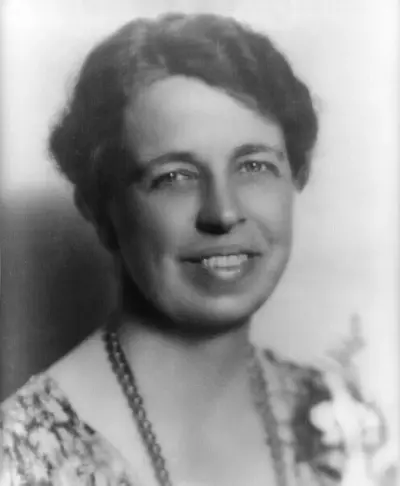
Anna Eleanor Roosevelt was an American political figure, diplomat and activist. She served as the First Lady of the United States from March 4, 1933, to April 12, 1945, during her husband President Franklin D. Roosevelt's four terms in office, making her the longest-serving First Lady of the United States. Roosevelt served as United States Delegate to the United Nations General Assembly from 1945 to 1952. President Harry S. Truman later called her the "First Lady of the World" in tribute to her human rights achievements.
