Frederick the Great Quotes
Don't forget your great guns, which are the most respectable arguments of the rights of kings.
Frederick II. Letter to Prince Henry of Prussia, 21 April 1759. Oeuvres de Frédéric le Grand, edited by J.D.E. Preuss, vol. 26, Imprimerie Royale, 1854, p. 147.


She was Queen of Scotland and claimed the English throne as well. While Elizabeth I was on the throne of England, Mary claimed that the court had no jurisdiction over an absolute monarch. Her son was in France at the time but eventually succeeded to the Scottish throne as James VI and the English throne as James I.

England had, under Henry VIII, left the Roman Catholic Church where the King replaced the Pope as head of the English Church. Henry’s successors then had to organize and manage the national Christian church. James was discussing the hierarchy of the Church of England and there was a suggestion that Bishops be eliminated and have every priest directly responsible to the crown. Bishops would be powerful figures who might form a power center. (They did later). However, King James I observed that the King is God’s choice and rules by divine right. So there had to be bishops to crown kings. The bishoprics were retained.


Typical of the times, the king was accountable to no one for anything. 200 years later, most of the world have accepted the principle that no one is above the law and that every leader is accountable to the people.

Drake named the land Nova Albion.

This was written shortly before he assumed the crown.

The priest had come to the Empress to complain about the debauchery of her Prime Minister and made the error of describing him as the first man of the empire. The story may be apocryphal but it illustrates the character of the Empress. The source of the exact words are given in the historical novel, Luise Muhlbach, Joseph II. and His Court

Note that the Queen always used the 3rd person rather than the 1st when referring to herself. This was true of most of the leading public figures in England at the time. Although she detested Gladstone, she gained control of her feelings and did her duty and “sent for” him to form the Government. She was personally delighted when, as she predicted, his government then had political difficulties.

Many American colonists had relatives and friends in England, and Paine argued that American independence would help and not het the English people.


After the King’s appointment in 1921 she “advised” him on establishing this regime and operating the government. At a time that women could not even vote in England, Bell was a kingmaker and major power in an area of the world that was much more sexist than England at the time.

This newspaper was his communications outlet.

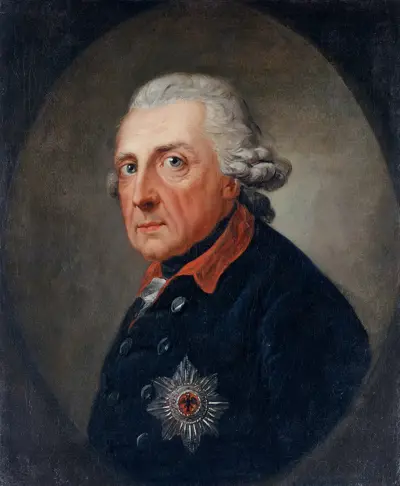
Frederick II was a Prussian king and military leader who ruled the Kingdom of Prussia from 1740 until 1786, reigning longer than any other Hohenzollern king. His most significant accomplishments during his reign included his reorganization of Prussian armies, his military successes in the Silesian wars and the Partitions of Poland, and his patronage of the arts and the Enlightenment. Frederick was the last Hohenzollern monarch titled King in Prussia and declared himself King of Prussia after annexing strategic parts of the Polish–Lithuanian Commonwealth in 1772. Prussia greatly increased its territories and became a leading military power in Europe under his rule. He became known as Frederick the Great (German: Friedrich der Große) and was nicknamed "The Old Fritz" (German: "Der Alte Fritz") by the Prussian people and eventually the rest of Germany.
