Christopher Wylie Quotes
Data is fungible. You can make as many copies of it as you want.
Christopher Wylie, Interview, Meet the Press, April 8, 2018
Sourced by: Eigen's Political and Historical Quotations


At the time Holland was a republic and a confederation of different states. There was an assembly of delegations from each of the States but most important decisions tended to be made by the Prince and a few of the representatives in his sway. Mathenesse was the delegate of the largest and wealthiest state but even others in his state delegation were out of the loop. Others claimed that the necessity of secrecy was just a pretext for a small group to dominate the republic. See {620069}. This battle goes on in almost every country including the United States where there are many matters in which only a few members of Congress and the President make decisions with national security given as the reason. In many cases there has been such a reason, but it is very easily corrupted into a pretext as only the people on the inside who get to make the decision know what the secret material was.

Privacy was a much more important value then and for Smith and most contemporaries there should be NO compromising records kept at all. Keeping records secret was itself an unacceptable compromise.

Referring to appearances of impropriety with reference to the Lincoln Savings & Loan scandal:

The Secretary of State had obtained an agreement of Israel and the Palestinians to open Peace Talks. The press immediately wanted to know who was saying what to whom and what positions the parties had. However, this was a classic example where transparency would make successful negotiations impossible—it would end the negotiations before the parties could even discuss possible alternatives.

Nixon was the ultimate pragmatist and used secrecy wherever he felt it might give him an advantage. His logic was that in the American system, the Judicial Branch was the only set of people who could pronounce something illegal. If the issue were secret, the judges could not see it, and therefore could never declare it illegal.

In Russia, with its authoritarian tradition and secret police, people have little expectation of privacy. Kaspersky was here referring to Europe and America as well as Russia.

He was referring to the massive surveillance NSA program whereby all telephone calls and most digital communications for every American was secretly tapped and stored in an NSA data base. The Senators of the Intelligence Oversight Committee received information in Classified executive sessions but they were not allowed to disclose anything that they learned in the briefings—even something as huge and probably unconstitutional as this program. Moreover, even when officials of the Intelligence Services lied under oath (see {634917}) in open session, the Senators could not disclose this fact.


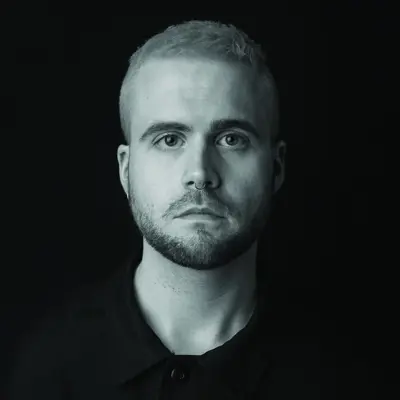
Christopher Wylie is a Canadian data consultant who previously worked at Cambridge Analytica, a political consulting firm led by Alexander Nix.
