Mao Zedong Quotes
Criticism may be made without regard to organizational discipline:
This basic principle of good communist government espoused by young Mao has never lasted in any communist nation including China under Mau. Even in the industrial democracies criticism within political parties is often frowned upon as being disloyal. So Mao’s early ideal found more implementation in the Western democracies but even there it was and is not always followed.
Mao Tse-Tung, 1893-1976, Chairman, Communist Party, China, On Correcting Mistaken Ideas In The Party, December 1929
Sourced by: Eigen's Political and Historical Quotations


Mao worked for a democratic reform in China and ending the single party rule of the Kuomintang. It was part of his communist theoretical concept that a democratic revolution is the first stage to be followed by the socialist revolution. Young Mao valued basic freedoms. However when the Communists finally attained power, freedom of speech, assembly and association no longer were important and were denied the Chinese people by the Communist Party which was the single party ruler just as the Kuomintang had been.
The Kuomintang was the anti-Communist political party controlled by Chaing Kai Chek and the major opponent of the Communists. It took more than another decade but Mau and the Communists with the vast support of the majority of the masses, did indeed take over all of China. At the time few thought that they would ever do it.
The non-communist forces of China were always struggling with each other for power. Attempts by non-communist reformers were defeated by autocrats, warlords, major landlords, and various religions organizations and denominations which were all fighting each other.


Speech given at the “Reform Section 5” launch event in 2012


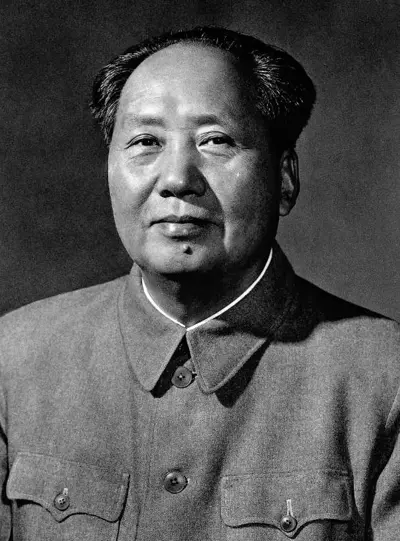
Mao Zedong, also known as Chairman Mao, was a Chinese communist revolutionary who was the founder of the People's Republic of China (PRC), which he ruled as the chairman of the Chinese Communist Party from its establishment in 1949 until his death in 1976. Ideologically a Marxist–Leninist, his theories, military strategies, and political policies are collectively known as Maoism.
