John Stuart Mill Quotes
Countries separated by half the globe do not present the natural conditions for being under one government, or even members of one federation.
This principle was at odds with the European scramble for Africa and other colonies which followed. When the colonial empires fell apart, Mill’s principle was considered valid by most. However, when Hawaii and Alaska became States of the United States, the counterexample to the principle was born. With modern communications and transportation distance becomes a less important factor. What are now contiguous trade blocks and federations may well develop into noncontiguous sets of land affiliated as a single state.
John Stuart Mill, 1806-1873, Member of Parliament, British Political Economist, Representative Government, 1861
Sourced by: Eigen's Political and Historical Quotations

Coping with the French and their Indian allies was a problem for all the American colonies and Franklin was the strongest voice for some kind of union or federation for not only mutual defense, but to facilitate commerce by having some uniform currency and basic laws of trade to promote the mutual economy. The 6 Iroquois tribes had years ago formed the Iroquois nation complete with a formal constitution that maintained tribal identity but also enabled unified action if any were attacked and provided mutual assistance on a number of economic areas. They became the strongest, wealthiest, healthiest and most sophisticated nation of North America before European colonization and unlike many other Indians with a few exceptions–see {21747} for an example–got along very well with the English colonists. Franklin was a great admirer and wanted to use some of their Constitutional provisions in the American Constitution 36 years later, but at the time tried to embarrass many American's into forming a union with language like this quote. Actually, he did not think of them as savages at all, but most Americans who knew little about them did, and Franklin was never above using people's prejudices to get them to buy into one of his political ideas.

Stieglitz was a critic of the Euro and the general notion of countries federating politically trying to have a common currency, He argued that the individual nations lose some of the major tools they have to affect the economy if things are not good economically.

At the time the Permanent China Seat in the United Nations was held by Chang Kai Chek and his nationalist forces who had abandoned the Chinese Mainland and were holding out on the island of Formosa (Taiwan). The Chinese Communists who represented 800 million Chinese wanted the China Seat. Most of the world saw the solution as recognizing the two de facto Chinas and having them both in the U. N. The Communists insisted that there was only one China and they were the legitimate representatives. The Nationalists, ironically took the same one China position, deluding themselves into thinking that they would get control of the Mainland. They put pressure on the U. S. and we adopted the “One China” policy which was adopted by most of the world. Soon it became evident that Taiwan was a small island of people who represented no one else in China, and the single Chinese seat went to the Communists. Later, many in Taiwan regretted the one China policy and would have loved to be recognized as an independent country.


He was one of the first to recognize this phenomenon. See the related quotes for others who were early observers of the coming changes.


There were several difficulties in this definition even for those British and Indian Congress leaders who were willing to accede to an independent Muslim state. Two of the most important where the definition of areas. They could be so defined as to include majority Hindu or Sikh areas surrounded by larger majority Muslim areas—the classic problem of boundary districting and redistricting. This was an insurmountable problem in the Punjab and elsewhere. The 2nd was the undemocratic nature of the demand. The Muslim League, unlike the Congress Party, had never had a very large participation and its leaders were never elected over a series of free and fair elections. Many Muslims were opposed to the Muslim League and there were areas of India, like Kashmir, where a large proportion of the 70% Muslim population were opposed to partition and if there were to be one would prefer to remain with India. With virtually 100% of the Sikhs, Hindus, Buddhists and Christians of Kashmir refusing to be part of a Muslim state, the majority in Kashmir would have then voted to remain a part of India but the Muslim League did not take account of democratic processes at the time. They changed their view later after they had infiltrated tens of thousands of semi nomadic Muslim Tribesmen across the border to gain the majority. Then the Indians would not accede to a plebiscite until the newcomers were removed and India has been in a constant war with Pakistan who has been trying to gain control of Indian Kashmir by war and terrorism.


This is an example of some of the early views about the federation of Europe.


This song was written during the rise of Napoleon Bonaparte when the possibility of a French invasion was on the minds of the British.


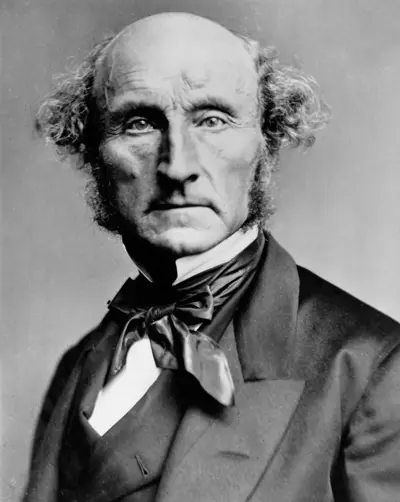
John Stuart Mill, usually cited as J. S. Mill, was an English philosopher, political economist, Member of Parliament, and civil servant. One of the most influential thinkers in the history of classical liberalism, he contributed widely to social theory, political theory, and political economy. Dubbed "the most influential English-speaking philosopher of the nineteenth century", he conceived of liberty as justifying the freedom of the individual in opposition to unlimited state and social control.
