Charles Evans Hughes Quotes
Contracts, however expressed, cannot fetter the constitutional authority of the Congress. Contracts may create rights of property, but when contracts deal with a subject matter which lies within the control of the Congress they have a congenital infirmity. Parties cannot remove their transactions from the reach of dominant constitutional power by making contracts about them.
During the early years of the New Deal, gold and silver certificates were ordered turned in to the U. S. Treasury, at a devalued price, and Congress passed a joint resolution declaring provisions in public and private contracts for payment in gold contrary to public policy and unenforceable in the courts. In a landmark decision on the contract issue, the Supreme Court ruled that:. control of gold and the monetary supply
Charles Evans Hughes, 1862-1948, Chief Justice, U. S. Supreme Court, U. S. Secretary of State, Governor of New York (Republican), Republican Presidential Candidate, Norman v. Baltimore & Ohio Railroad, 1935
Sourced by: Eigen's Political and Historical Quotations

Marshall is famous for, as Chief Justice, establishing the principle that the Judiciary can override Congress and the Executive in determining Constitutionality. However, as this quotation illustrates this principle had been discussed in open debate on the ratification of the Constitution. It was not simply a grab for power by a Chief justice; he uttered this quotation long before he ever suspected he would be a judge but actually spent much of his career in the executive and legislative branch of government.


Most people agree as to what the powers are that are “enumerated” in the Constitution. But there is endless difference of opinion as to what the “implied necessary and proper” powers are. However, this quotation establishes the greater powers of the Government to act in foreign affairs.


In 1949 the NATO treaty was signed. There was concern that a phrase in the treaty authorizing signatories to take "such action as it deems necessary, including the use of armed force" would undermine Congress's powers:

Cummings was arguing against a Constitutional amendment. His alternative led to Roosevelt's court packing schema.


At the time, in many states married women could not control their own inheritance, could not sign a contract, owned no part of a family business that a women might have founded and worked in her entire life, could not be an executor of a will—even if it were her husband’s.


Powell was the Secretary of State and Addington kept advising the administration that as long as the President was acting in defense of the country in his capacity as Commander in Chief, he did not have to obey any existing laws that had been Constitutionally passed which in the opinion of the President restricted or limited the President or the executive branch. Addington was an attorney and Assistant to the Vice President, but he was given much responsibility for administration policy. Powell the Secretary of State of the Administration could not have disagreed more and although most politicians including Republicans disagreed with the Addington thesis, Powell was one of the few Republicans to criticize the Addington position.

The Supreme Court which had found many of the New Deal laws unconstitutional, saw no Constitutional Problem with Social Security. However, the most popular legislation in American history had many right wing and in this case Fascist opponents. The Sentinels of the Republic was a group of wealthy right wing extremists who opposed FDR and all his programs of which Social Security was the most important. See {620798}.

What was to become the 14th Amendment was being discussed. Several of the most radical Republicans drafted language that would allow Congress to make any law regarding life, liberty or property, so that they could be sure that the States would not make their laws in a discriminatory manner. However, Hotchkiss and the majority wanted to be sure the laws were not discriminatory but they didn’t want Congress to have the power to make any law regarding life, liberty and property for every state. The current version of the 14th Amendment just prohibited discrimination in laws, not empowering the Federal Government to override the state governments in most important areas.
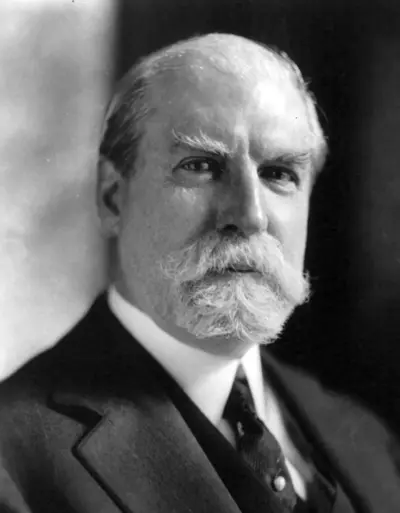
Charles Evans Hughes Sr. was an American statesman and politician who served as the 11th Chief Justice of the United States from 1930 to 1941. A member of the Republican Party, he was also the 36th Governor of New York, the Republican nominee in the 1916 presidential election, and the 44th United States Secretary of State.
