Dolley Madison Quotes
Congress trifle(s) away the most precious of their days—days that ought to be devoted to the defense of their divided country.
Dolley Madison, 1768-1849, First Lady, Letter to Mrs. Gallatin, January 7, 1814
Sourced by: Eigen's Political and Historical Quotations


This principle of support of Administration foreign policy (even if opposed) when abroad had an enormous influence on both political parties behavior for almost half a century. It began to fall apart with the hyperpartisanship that the Republican’s deep enmity to Democratic President Bill Clinton, and this was retaliated against be some Democrats during the George W. Bush Presidency. It completely disintegrated with the antipathy many very conservative Republicans had against President Barack Obama in the early 21st century. See {633113} for the Senator’s elaboration on the meaning of the policy.

The nation was facing the scourge of McCarthyism. Senator Smith was the most courageous member of the Senate in denouncing the lying demagogue of her own party who was so powerful at the time—Joseph R. McCarthy. At the same time, there were some communists trying to undermine the values or the nation as well as the fascists. Smith was one of the first to recognize the danger of both.


Jackson was then a U. S. Senator

The statement was somewhat over the top considering that the Senate at the time contained some of the most decorated of American war heroes, while Mr. Bush’s involvement in the defense of the people was a short training stint in the Texas Air National Guard.

At the time Harrison, one of the signers of the Declaration of Independence, was a Colonel serving under Washington. The war had been somewhat successful but the country was very weak and in great danger, and Washington and many others thought that Congress needed a better quality of leadership. Harrison’s son and great grandson would both become Presidents of the United States.


The Congress at the time was one of the worst in American history, accomplishing little more than nothing, mired in gridlock and ideological hyperpartisanship, with little concern for the nation as a whole. Other critics observe that it is the voting public that elected and re-elected the Congress and therefore must share the responsibility.

The House of Representatives trying to adjust to Tea Party members voted against anything Democrats were for even if Republicans had created the legislation and previously supported it. The Congress the previous year had been the least productive in American history and it was mired in hyper-partisan gridlock, and the American public was fed up with Congress.


At the time, most members never read the bills they voted on, though some tended to read earlier versions. The bills were very long—sometimes as long as 2000 pages. Usually a few members of Congress worked with Congressional Staffs and lobbyists to finalize bills. It was believed that the lobbyists were the only people who read the entire bills in all their versions.


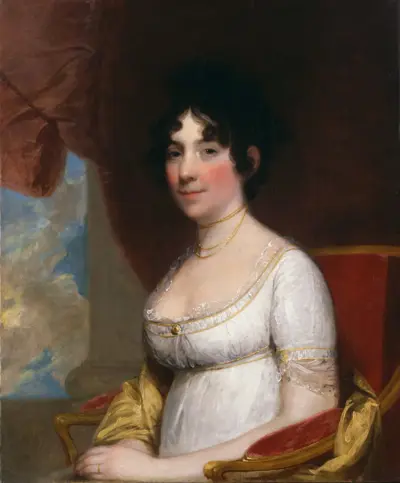
Dolley Todd Madison was the wife of James Madison, President of the United States from 1809 to 1817. She was noted for holding Washington social functions in which she invited members of both political parties, essentially spearheading the concept of bipartisan cooperation, albeit before that term was in use, in the United States. While, previously, founders such as Thomas Jefferson would only meet with members of one party at a time, and politics could often be a violent affair resulting in physical altercations and even duels, Madison helped to create the idea that members of each party could amicably socialize, network, and negotiate with each other without resulting in violence. By innovating political institutions as the wife of James Madison, Dolley Madison did much to define the role of the President's spouse, known only much later by the title First Lady—a function she had sometimes performed earlier for the widowed Thomas Jefferson.
