Annie Besant Quotes
Commonwealth
The term was expanded to denote the association between Britain and all of her colonies and former colonies. It was further generalized beyond Britain and used in many, political contexts.
Annie Besant, 1847-1933, English Political Activist, President, Indian National Congress, Term Coined to Describe the relationship between England and India that she designated, an “Indo-British Commonwealth”, Quoted in “Anne Besant,” http://www.ceeby.com/people/anniebesant.cfm, July 5, 2005
Sourced by: Eigen's Political and Historical Quotations


Article 9 of the 1946 Japanese constitution that was imposed on Japan {604739} severely limited Japan’s military. Emperor Hirohito asked privately how Japan would be protected.

Given the time, Mill’s view on the colonies were appreciated by few Englishmen, but turned out to be exactly predict the British reality a century later.


There was a small but influential pro-Nazi segment of British society which had a small parallel in the United States. Even the Duke of Windsor had pro-German sympathies as did the American Ambassador to England, Joseph Kennedy (father of JFK) see {610119}.
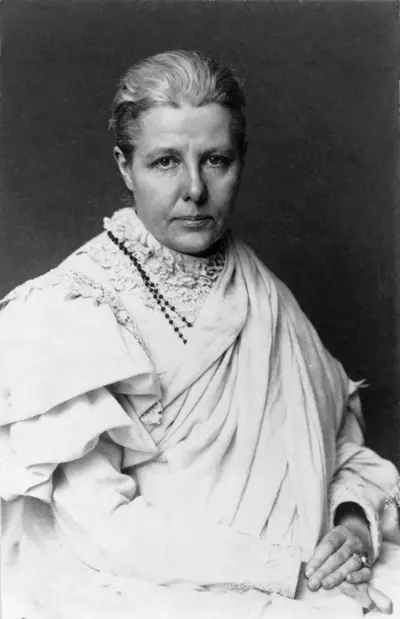
Annie Besant (née Wood; 1 October 1847 – 20 September 1933) was a British socialist, theosophist, freemason, women's rights and Home Rule activist, educationist, and campaigner for Indian nationalism. Regarded as a champion of human freedom, she was an ardent supporter of both Irish and Indian self-rule. She was also a prolific author with over three hundred books and pamphlets to her credit. As an educationist, her contributions included being one of the founders of the Banaras Hindu University. For fifteen years, Besant was a public proponent in England of atheism and scientific materialism. Besant's goal was to provide employment, better living conditions, and proper education for the poor.
