Imad-Ad-Dean Ahmad Quotes
Cliterodectomy: complete removal of the clitoris) or infibulation (excision of part or all of the external genitalia and stitching/narrowing of the vaginal opening), or any genital mutilation which impairs the woman's ability to enjoy sexual relations… For the Muslims, opposition to cliterodectomy and infibulation should be considered part of our ongoing mandate to fight against superstition and oppression … Since it has neither hygienic nor religious value, there is no justification for Muslims to practice this painful and potentially harmful practice, and it would best be considered harâm (prohibited).
There is a tradition of female circumcision in some more primitive Islamic cultures, but there is no statement in the Koran or other records of The Prophet ever requiring or even advocating such an activity. The only theological justification for the practice at all lies in a historical document of very questionable authenticity in which Mohammed purportedly did not condemn the practice at the time but merely urged that the girl not be hurt or cut deeply.
Imad-ad-Dean Ahmad, President, Minaret of Freedom Institute, Female Genital Mutilation: An Islamic Perspective
Sourced by: Eigen's Political and Historical Quotations


Islam forbids homosexuality and Sharia (Islamic religious law) prescribes death as the penalty for homosexuality. At that time Iran was a Muslim theocracy and if there were overt homosexuality that was officially discovered, the heretics would be killed. The logic of the government was that since they had killed the homosexuals, there were none left. At the same time all the research showed that while Muslim homosexuality was slightly less than Christian, it was still quite significant in all Muslim cultures that had been studied. If the President was to be believed, Iran was the only exception.
While the majority of Muslims do not practice female circumcision, very few are openly critical of the barbaric practice. Dr. Al-Marayati is one of the few.


This quotation which appears absurd on the surface given Iran’s terrible record with religious minorities provides insight to Islamic orthodox thought. For the orthodox Muslim, Sharia—Koranic Law—is the basis of the society. God defines the rights of people and their obligations. Whatever rights are provided by Sharia, Khomeini and some others wished to provide them equally to religious minorities also. However, those rights do not include the right to criticize the Islamic law or the leaders who implement it. That would be heresy if done by a Muslim, a Christian, or a Jew. A Christian church may not erect a public cross or ring bells on Sunday. That is prohibited by the Koran and is imposed on all. Bahai religious adherents are tracked down in the Islamic Republic and are often executed. ‘What about their rights?’ they ask. The answer is that the Bahai were Muslims who have become “backsliders” and heretics, and under Sharia, they must be executed for heresy; they are deemed to be heretical Muslims and not members of a minority religion.
This is another proverb that has the de facto force of law. “Cutting her braid” means the honor killing of a girl who has been morally transgressed, usually sexually by a close relative. Even in earlier times fathers or even brother might have a love for a daughter or sister that would transcend this obligation to protect the family honor. The society to get around this human emotion which might produce total licentiousness if girls were not so disciplined came up with the idea of extending the right and obligation even to the paternal cousins. So if the father would not kill the girl, and the brothers would not, and the paternal uncles would not—or were unable to by reason of age or infirmity—any of the cousins could and should do dispatch the young lady and preserve the family’s honor—hence the term “honor killing.” In many Muslim societies, even today, this proverb is a legal defense against murder.


He is often referred to as “of Lahore.” He was a much better theologian than a historian. His credit of Islam with the principles that would end slavery, ignored the fact that just as American founding fathers espoused equality and freedom yet some owned slaves, likewise Mohammed, the founder of Islam, was a slaveholder. Historically, long after most of the world had abolished slavery, it still existed in the Islamic nations. They were forced out of the African slave trade by the European powers in the 19th century. But slavery was legal in Saudi Arabia as late as the 1960s. Slavery was still practiced in Sudan in 2005 with Muslims attacking Christians and Animists and taking them as slaves despite the official laws banning such practices. The government itself aided the slavers. Also, although Islam is credited with a major assault on slavery, it was not slavery per se that Muhammad banned. It was the slavery of another Muslim. Sharia and the Koran allows slavery so long as the slave is an unbeliever.


The Islamic Fundamentalist Terrorist organization, Boka Haram, argues to install Sharia—Islamic religious law. However they also object to any children getting any education in a Western style school as opposed to an Islamic School. They had killed hundreds of children and teachers in public and private schools. The kidnaped the girls to provide them as wives for the fighters of the organization.


She was referring to Malala, a young Pakistani girl who was shot and badly wounded in an assassination attempt. She had publicly advocated girls attendance at school—a practice banned by the ultra-fundamentalist Taliban.

A fatwa is a legal / theological ruling or decision made by an Islamic legal expert. Many disagree with each other just as American legal opinions often disagree.

Abdul Rahman, Afghan citizen, had converted from Islam to Christianity 16 years before. Conversion from Islam is a capital crime under Sharia Law which was the law of Afghanistan even after the Taliban had been overthrown. He was jailed and threatened with death. Statements like this and others made directly to the government persuaded the Afghan politicians to go against their mullahs who demanded the death penalty as is proscribed by Islamic Law—Sharia. The judges tried to get Rahman to recant and he would not (see {589518}). So they finally decided that he must be mentally insane and therefore could not be tried, and the problem was solved that way.
Danish fundamentalist Muslim Groups were demonstrating, protesting, and threatening Danes who wrote or published cartoons depicting the Prophet Mohammed. Other Europeans who had committed what Muslims thought to be blasphemy had been attacked and even murdered by Muslim fundamentalists. Led by Nasim Rahnama, some Danish Muslims, braved attack and possible death, and produced a petition of Muslims defending the right of freedom of publication. See {59932} & {59919}.
American reformers followed slavery issues in Africa and elsewhere. The status of Africa was particularly important as the notion of extensive American Black colonization was still viable to many.
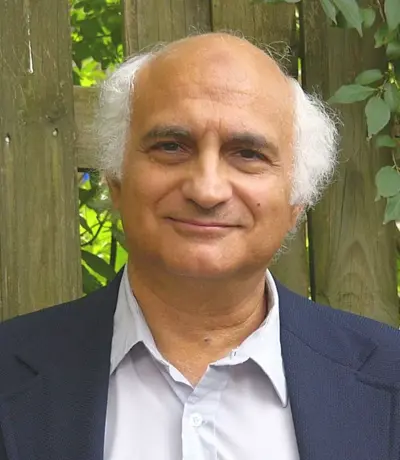
Imad-ad-Dean Ahmad (also known as Dean Ahmad) is a Palestinian American scholar and the president of the Minaret of Freedom Institute, a libertarian 501(c)(3) tax-exempt Muslim think-tank. He also is president of the Islamic-American Zakat Foundation, a 501(c)(3) tax-exempt religious and charitable organization that primarily serves poor and needy Muslims in the United States.
