Herman Melville Quotes
Civilization has not ever been the brother of equality. Freedom was born among the wild eyries in the mountains; and barbarous tribes have sheltered under her wings, when the enlightened people of the plain have nestled under different pinions.
Melville, Herman. Mardi: and a Voyage Thither. Vol. 2, Harper & Brothers, 1849, p. 240.


Essentially this quotation led to a major war and yhrn a later war of independence for Blacks in South Africa. Porter was the Attorney General of the English Cape Colony in South Africa. In an early legal ruling he observed that South Aftica was a colony under English law which did not permit discrimination on the basis of skin color. However, there was a large proportion of Afrikaners—whites of Dutch Ancestry who were culturally strong racists and saw the Blacks as a combination of potential rivals for land and a potential subjegated labor force. They tended to leave the Capetown area and English law. The Afrikaners ended up in a major war—the Boer War—against the English and although the English won the war, the Afrikaners won the political peace and ended up dominating South Africa and imposing apartheid. The Blacks of the mid 20th century had if nothing else, the 100 year old legal and moral precendent from Porter’s opinion which justified the ANC leading the attack on apartheid which finally succeeded. It took 100 years and millions of suffering and dying people but finally, the law of South Africa was as Porter had stated it, and since the Blacks were in the great majority, the Whites became the minority, but due to the ANC leadership of men like Nelson Mandella, the Blacks did not seek revenge on the Afrikaner whites although there was resentlent for generations.

One of the most amazing things about Abraham Lincoln is the way he grew and matured over time. In 1854 he was not sure that the Negro could be the equal of the white. As he met more Black leaders, saw more, reflected more, and had more responsibility, he grew and developed his views on race. But it was statements like this that led to the great distrust that the very strong abolitionists like Wendell Phillips had in him.


This statement has been described by the great American scientist Stephen J. Gould as “the most famous 19th century statement of equality made by a scientist.” Humboldt was one of the great scientists of his era and personally met with Thomas Jefferson who was a great admirer of his and who had read his works. It is somewhat ironic that the German racism of the 20th century was so ignorant of Humboldt’s views even as it lauded the great German. The famous Nazi book burning scene seen in newsreels around the world actually took place outside the library of Humboldt University in Berlin.


Paine observed that there were many people worse off in England and other civilized countries than they would be if born in a primitive culture. To him this was a failure of civilization.


This was a quarter of a century before women in the United States could vote.


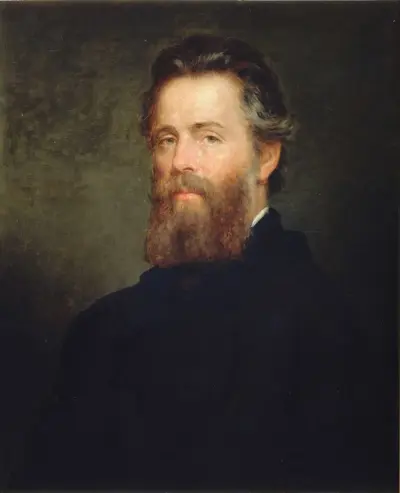
Herman Melville was an American novelist, short story writer, and poet of the American Renaissance period. Among his best-known works are Moby-Dick (1851), Typee (1846), a romanticized account of his experiences in Polynesia, and Billy Budd, Sailor, a posthumously published novella. Although his reputation was not high at the time of his death, the centennial of his birth in 1919 was the starting point of a Melville revival and Moby-Dick grew to be considered one of the great American novels.
