Mark Twain Quotes
The peoples furthest from civilization are the ones where equality between man and woman are furthest apart.
This was a quarter of a century before women in the United States could vote.
Mark Twain, Writer, Founder, Anti-Imperialist League, Notebook, 1895
Sourced by: Eigen's Political and Historical Quotations


Puglia was an anti-feminist.

This 12th century observation which appears so obvious has been ignored by the vast majority of Islamic scholars and writers subsequent until modern times, and even then they represent the small reform minority of Islamic thinking.


Vladimir Lenin
Marcus Porcius Cato. This quotation has had two different interpretations over time. One was that women if they received equality of treatment and voting would have an advantage for they also had their traditional “feminine wiles” and their sexuality, hence would dominate men. The second was a also a warning but based on the fact that women were superior in many ways, and given an equal chance, would excel men. The later interpretation is argued by some who point to the 2011 American data that shows more females than males graduating from high school and college, and females outnumber males in medical, law and several other professional schools. With the exception of a few Roman men, most heeded Cato’s warning and never took a chance on female equality.


SNCC had been formed to promote equality, but race and class were the issues, not gender. Many of the women left SNCC and proceeded separately to start a women’s movement.


Puglia was an anti feminist. The stoa was the city square where men commonly congregated and discussed politicis.


Although this was written in a 1920 letter, the letter was not publicly published until 1970.
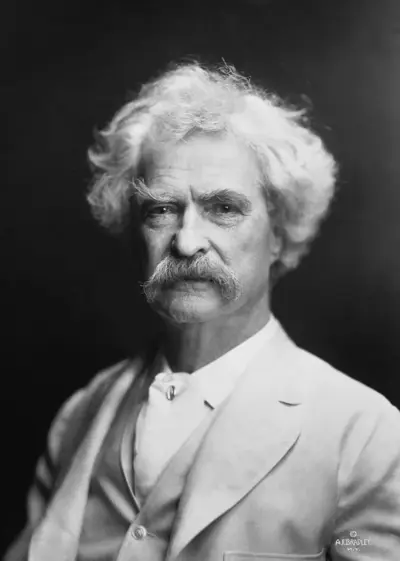
Samuel Langhorne Clemens, known by his pen name Mark Twain, was an American writer, humorist, entrepreneur, publisher, and lecturer. He was lauded as the "greatest humorist the United States has produced," and William Faulkner called him "the father of American literature". His novels include The Adventures of Tom Sawyer (1876) and its sequel, the Adventures of Huckleberry Finn (1884), the latter often called "The Great American Novel".
