H. L. Mencken Quotes
[Characterizing William Jennings Bryan:] ... a tinpot Pope in the Coca-Cola belt.
H. L. Mencken, 1880-1956, Journalist and Columnist, The Baltimore Sun, 1925
Sourced by: Eigen's Political and Historical Quotations

The “subversive” ideas that Bryan espoused included going off the gold standard and a whole series of reforms that we take for granted today. In a certain irony, Carnegie and other capitalists were really worried about Bryan (as opposed to other so called reformers) as he believed Bryan was too honest and meant exactly what he said.


"Imperium" is a Latin word which, in a broad sense, translates roughly as 'power to command'. In ancient Rome, different kinds of power or authority were distinguished by different terms "Imperium" referred to the sovereignty of the state over the individual—Wikipedia. The Consul was a wonderful diplomat. He had no respect for the South not only because they were fighting to maintain slavery, but also he found most of their diplomats and officials very incompetent. He found it hard to participate in all the Confederate ceremonies as he was their exhibit number one that they had International Recognition and they "exhibited him frequently. Despite this he was charming and never argumentative about slavery or other political positions that he loathed. As a matter of fact, the Southern Diplomats regarded him as a man sympathetic to the South with an understanding of their point of view. As a result he gained a huge amount of intelligence which he regularly dispatched back to London. England was neutral {35520} in the Civil War, but England did not recognize the Confederacy as a nation, else they would have sent an ambassador. The Southern politicians worked hard to get him to carry their message that if they would be recognized, they would grant England many favorable trade advantages as the English textile industry really wanted Southern cotton. While apparently sympathetic to the Southern cause, his reports contained all the negative information about the South and counseled against recognition just as the English Ambassador in Washington did—see {583131}.
This quotation is puzzling to many in that Olasky seems to be castigating the President because he wanted to develop a “Great Society”—because he had a great vision for America. However, to Olasky and a small core of religious fundamentalist conservatives a President wanting to develop a great society was bad for two reasons. They do not believe that the government – any government should shape the nature of the society or interfere with individuals and families in shaping society. A government that could have such a vision and implement it must be a big government which is per se undesirable. In addition, in their orthodox view God has already determined the vision for society and no man should try and substitute his vision for God’s commandments. This concern of an energetic secular government having independent vision is not only a problem for the right wing Christian fundamentalists, but is typical of Muslim fundamentalists and Jewish also. There were a small minority of Jewish Israeli fundamentalists who objected to the creation of the State of Israel at the birth of the Jewish state for the same reasons that Olasky gives for opposing a strong visionary government.

Owens had just retired after 24 years in Congress. When Reagan began his campaign the majority of the racists of the South were furious that their party, the Democrats, had passed the Civil Rights Act of 1964 ending legal segregation and racism of the South. Reagan implemented a “Southern Strategy” by using code words that endorsed Southern racism and this swung the formerly Democratic “Solid” South to the Republican side changing the balance of power for years. Although Reagan was not himself racist and was a very popular President there were many who never forgot his pandering to the racists to get elected to begin with.


TR was referring to William Howard Taft whom he had picked as his successor to the presidency.

In the Democratic national convention of 1912, Clark had obtained a majority of the delegate votes and was well on his way to the two thirds necessary for the Presidential nomination. William Jennings Bryan, a close personal friend of Clark's, headed the Nebraska delegation which had already instructed Bryan to vote for Clark. However, in a dramatic repudiation of his old friend, Bryan switched to Woodrow Wilson and turned the tide against Clark, who characterized Bryan as:


Rove had bridged the traditional gap between the right wing Religious fundamentalists and large business, industrial, heavy donors to the party. These groups usually diverged on economic policy and cultural values however Rove had convinced both that they should tolerate the other for the sake of maintaining power for President George W. Bush who delivered enough to each to hold them in coalition. Rove’s style tended to moralize everything for the religious right including their cooperation with major exploiters of economic self-interest. Rove’s religious tactics which were so successful was a subject of great interest and analysis, especially since Rove himself was an agnostic.
A professional mature female actress spoke the words. The Majority of the Republicans voted against the Medicare law that had passed under Lyndon Johnson. They lost millions of votes over that for years. Then at the end of the 20th century, many Republicans tried to reduce or privatize Medicare which by then was second only to Social Security among all government programs. The Democrats then used many variants of this Schwartz ad to great effect.
The Republicans were the secular party at the end of the 19th century and the beginning of the 20th century. It was the Democrats who were the religious party and evangelicals and fundamentalists overwhelmingly supported William Jennings Bryan, the 3 time Democratic Presidential candidate who himself was a religious fundamentalist. Republicans campaigned against the Democrats on separation of church and state issues. See {589654} for a quote on the Republican shift.


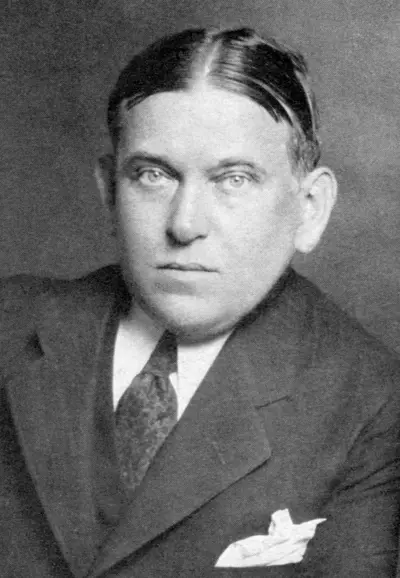
Henry Louis Mencken was an American journalist, essayist, satirist, cultural critic, and scholar of American English. He commented widely on the social scene, literature, music, prominent politicians, and contemporary movements. His satirical reporting on the Scopes Trial, which he dubbed the "Monkey Trial," also gained him attention.
