John Stuart Mill Quotes
Can we blame an elector of the poorer classes, who has only the choice among two or three rich men, for requiring from the one he votes for a pledge to those measures which he considers as a test of emancipation from the class-interests of the rich?
John Stuart Mill, 1806-1873, Member of Parliament, British Political Economist, Representative Government, 1861
Sourced by: Eigen's Political and Historical Quotations


At the time English democracy was still suspect especially among the aristocracy.


1st Earl of Beaconsfield. See Thomas Jefferson for a similar view.


Chesterton preceded by almost half a century much of the intellectual dispute of the War on Poverty of the 1960’s where much of the middle and upper class tried to change a variety of behavior patterns and customs and values of the poor.

The Tay Son Rebellion had overthrown the Nguyen Lords in the South by 1783 and then the Trinh Lords in the North in 1789. The revolutionary unification of Vietnam was short lived when Hue, the conqueror of the North, died in 1792. See {42229} for a reason for the very high taxes.


This is one of the proverbs of King Solomon of the Jews, son of King David.

The cycle of poverty of 20th century America was not new. It has existed for centuries in most cultures and countries.


The Supreme Court had ruled that there could be no limits placed on the amount of money that could be spent by a rich company or person to campaign for a candidate. It would deny them their right to freedom of speech. That was the context of Hollings’ remark.


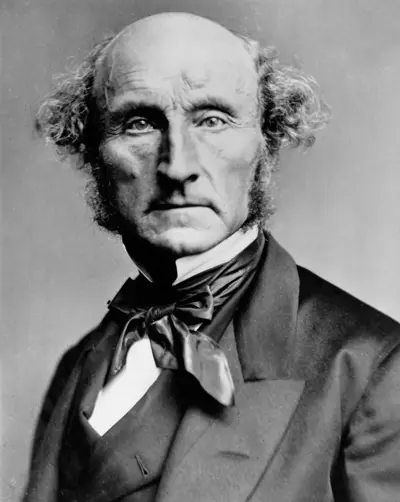
John Stuart Mill, usually cited as J. S. Mill, was an English philosopher, political economist, Member of Parliament, and civil servant. One of the most influential thinkers in the history of classical liberalism, he contributed widely to social theory, political theory, and political economy. Dubbed "the most influential English-speaking philosopher of the nineteenth century", he conceived of liberty as justifying the freedom of the individual in opposition to unlimited state and social control.
