John Stuart Mill Quotes
In times not long gone by, the higher and richer classes were in complete possession of the government. Their power was the master grievance of the country. The habit of voting at the bidding of an employer, or of a landlord, was so firmly established, that hardly anything was capable of shaking it
John Stuart Mill, 1806-1873, Member of Parliament, British Political Economist, Representative Government, 1861
Sourced by: Eigen's Political and Historical Quotations


He was stating the major objections that were given by many of the royalty and the upper class who opposed universal suffrage. Milton however supported the right of all men to vote. See {632509}. Even in the 21st century, there are right wingers who oppose universal suffrage on the grounds that the lower classes vote only concerned by what they materially will obtain, as if many people of all classes do not do that and that all poor do. For additional reasons see {632533}.
Salisbury was a brilliant, effective prime minister, but he was a snob and not a democrat. See {639131}.

At the time English democracy was still suspect especially among the aristocracy.


There was much democratic pressure from the Russian workers in the decade after the Russian Revolution. This was brutally suppressed by Stalin Immediately after the Russian Revolution, the provisional government appointed him as Ambassador to the United States. However, the provisional government was supplanted when the Bolsheviks took over. Not enamored of Communism, he stayed in the United States with many other Russian refugees.

Samuel Langhorne Clemens, 1835-1910. This is the earliest written or spoken instance of the “new deal” phrase that we have found in a political context. This was 43 years before President Franklin Delano Roosevelt adopted it as the name of his political program.


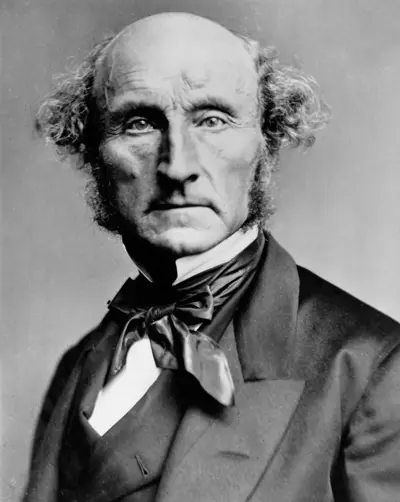
John Stuart Mill, usually cited as J. S. Mill, was an English philosopher, political economist, Member of Parliament, and civil servant. One of the most influential thinkers in the history of classical liberalism, he contributed widely to social theory, political theory, and political economy. Dubbed "the most influential English-speaking philosopher of the nineteenth century", he conceived of liberty as justifying the freedom of the individual in opposition to unlimited state and social control.
