Jacob Bronowski Quotes
By the worldly standards of public life, all scholars in their work are of course oddly virtuous. They do not make wild claims, they do not cheat. They do not try to persuade at any cost. They appeal neither to prejudice nor to authority ...
Jacob Bronowski, 1908-1974, British Writer and Scientist, The Sense of Human Dignity, Lecture, the Massachusetts Institute of Technology, March 19, 1953
Sourced by: Eigen's Political and Historical Quotations


Ibn al-Nafis was one of the great scientists of all time. He analyzed the human heart, lungs, and circulatory system. This quotation is often given by Muslim modernists and reformers to illustrate that Islam at one time was open to new knowledge, dissent, ideas of all kinds. A century later, Islam closed intellectually and later and even today, Muslims are killed for what became heresy. Truth became determined by the Koran and the words of The Prophet only, Christianity and the Church imposed a similar restrictive view of truth using the Bible and Jesus. However, the Reformation and modernity led Christianity to merge and adopt the more modern and scientific view with the exception of some Christian fundamentalists. Islam had the modern view and abandoned it causing the many educated Islamic reformers and modernists of today great difficulty in changing the culture and laws as a whole.

When a scientist is persuaded to change his position, he is acting in the great tradition of the best of scientists. When a politician does the same, he is a flip flopper, without any real principles and clearly not to be trusted. A scientist would not be trusted by his peers if he did not readily change is views.


This is an extract from a well-known standard for college professors.


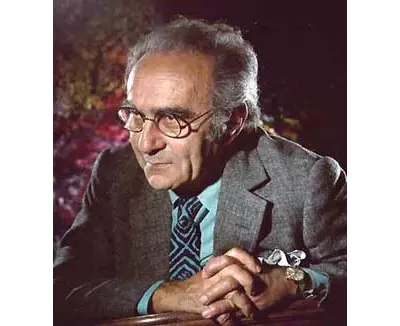
Jacob Bronowski was a Polish-British mathematician and historian. He is best known for developing a humanistic approach to science, and as the presenter and writer of the thirteen-part 1973 BBC television documentary series, and accompanying book, The Ascent of Man, which led to his regard as "one of the world's most celebrated intellectuals".
