Nguyen Cao Ky Quotes
By fighting a limited, defensive war, America permitted the enemy to endlessly re-supply their field armies.
Ky, Nguyen Cao. Twenty Years and Twenty Days. Stein and Day, 1976.


This historic speech is regarded as one of the most important in Australia's history, marking a turning point in Australia's relationship with its founding country, the United Kingdom. Many felt that Prime Minister Curtin was abandoning Australia's traditional ties to the British Isles. -- Wikipedia


He was arguing for a preemptive attack rather than wait to be attacked.

He was a strong believer in surprise attack and preemption.

Ruling group of France during the French Revolution. The purchase and transportation of an army in the field was a very expensive element of war and was very difficult as well. The Directory urged its generals to live off the land and get their food from the enemy country they were invading. Rarely did they pay for it but typically just took it from the civilians. Napoleon who served under the directory took this principle one step further. He also stole the invaded country’s art—paintings and statues mostly. These he sent back to Paris where they were sold to rich people. This way he could pay the salaries of the troops and buy more weapons and ammunition. Napoleon could conquer so much territory because France did not have to pay for the military effort as other countries did. This is one of the major reasons for example that the Louvre Museum in Paris has so many great Italian and Spanish paintings.

Washington’s strategy was brilliant in that he wanted to avoid open, fixed position, European style battle. Instead, he fought a defensive war where he moved his troops and had them dig in by constructing defensive works that would be easier to defend against experienced European troops. It was only when the French forces combined with his that Washington went on the attack in the open.


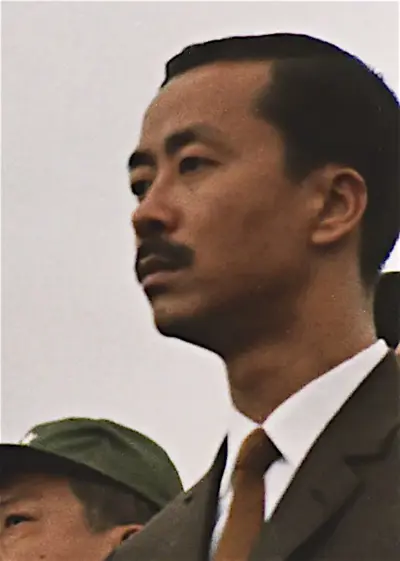
Nguyễn Cao Kỳ was a Vietnamese military officer and politician who served as the chief of the Republic of Vietnam Air Force in the 1960s, before leading the nation as the prime minister of South Vietnam in a military junta from 1965 to 1967. Then, until his retirement from politics in 1971, he served as vice president to bitter rival General Nguyễn Văn Thiệu, in a nominally civilian administration.
