Levi Lincoln Quotes
Because of the perverse, hostile, and malignant state of the opposition [the Federalists], with their faculty of imposing on the public mind and producing excitements, every measure originating with the executive will be attacked.
The bitter partisanship of the time was as intense as any in our history. Jefferson was attacked more frequently and more virulently than even William Clinton. Further, there were still major issues of Congressional vs. Presidential power, and there were those who believed the President should not at all concern himself with the legislative process but should merely carry out those laws that Congress passed.
Levi Lincoln, *, U. S. Attorney General (Democratic Republican), Communication to President Thomas Jefferson regarding his legal authority to initiate the Lewis & Clark expedition, 1803
Sourced by: Eigen's Political and Historical Quotations


Many Republicans, having been mostly in the minority for decades had come to see their roles in Congress as doing whatever they could to attack and obstruct any Executive Branch initiative or activity. However the extreme Republican conservatives have generally also worked to obstruct centrist and liberal Republicans as well as Democrats.


Earlich won one term and then was trounced soundly in his attempt for a 2nd term. The dirty tricks like planting a false story that the Democratic opponent was having an adulterous affair did not work as well in a bid for the second term as the voters were not happy with Earlich’s performance at all.


This was the President’s original role regarding legislation. However, in the 20th century, Presidents have become more active and suggest laws and often initiate the process and then end it by signing the law that he suggested and shepherded through the Congress. But this was never the vision of the Founding Fathers, but since it is not addressed in the Constitution is not an unconstitutional process.


Congress at that time had about a 12 percent public approval rating. Other emergency disaster appropriations had been made in previous years in days or weeks, but the aid for New Jersey, New York and Connecticut had been voted by the Democratic-controlled Senate but not in the Republican controlled House. The Republican House leadership had planned a vote after the Fiscal Cliff vote the previous evening before the end of the Congressional term. Then the speaker cancelled the vote infuriating Christie and many of the members of Congress. His reason was that there was opposition from the Tea Party Conservative wing of his own party who had just been badly beaten on the fiscal cliff legislation, and the Speaker was up for reelection by his own party caucus the following day. If the vote had proceeded, it would have passed with Democratic and some Republican support but with the opposition of the conservative wing some of whom noted that the states seeking the emergency aid had just recently voted for President Obama and they were opposed to more federal spending despite the fact that emergency aid had never before been subjected to such partisan criteria. After much pressure, the Speaker then committed to an up or down vote in the following Congress to the chagrin of some of the Tea Party members. Governor Christie, much admired for his commitment to his state and not politicking was his candid self but he did not even go as far as Republican Congressman Peter King {630995}.

Most American politicians and citizens, unlike DeLay, believe that arguing against the opponents’ political philosophy should be done with debate, civil argument, advocacy, speechmaking and writing and not by attacking opponents and confronting them whenever possible. Later, DeLay was convicted and sentenced to jail for money laundering and illegally spending and raising campaign funds. He was also reprimanded by the House Ethics Committee for unethical methods of fund raising for other earlier actions.
_0_thumbnail_47x47.jpg "Statue of Robert Hall in Leicester.")


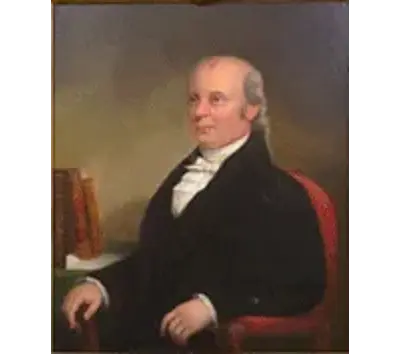
Levi Lincoln Sr. was an American revolutionary, lawyer, and statesman from Massachusetts. A Democratic-Republican, he most notably served as Thomas Jefferson's first attorney general, and played a significant role in the events that led to the celebrated Marbury v. Madison court case. He served two terms as Lieutenant Governor of Massachusetts, acting as governor for the remainder of Governor James Sullivan's term after his death in December 1808. Lincoln was unsuccessful in his bid to be elected governor in his own right in 1809.
