George Mason Quotes
Have you Gentlemen had ever reflected on that awful period of time between the passing and final adoption of this constitution—what alarm might possibly take place in the public mind.
George Mason, 1725-1792, Member, Virginia & Federal Constitutional Conventions, Debate, Constitutional Convention, Philadelphia, 1787, Quoted in the notes of Georgia Delegate William Leigh Pierce, ~1740-1789
Sourced by: Eigen's Political and Historical Quotations


Most of the delegates to the Constitutional Convention were aristocrats, and all were elites of different types. However, they wanted and knew that they would have to submit their work product to the people for ratification. So while each had their own views, most were heavily influenced by their perception of public opinion reaction to their draft. Even with that, in order to get the ratification votes, they had to add the first 10 amendments—the Bill of Rights in order to get the votes of the men who were NOT at the convention.


In the 1787 Constitutional Convention in Philadelphia, the delegates agreed that the there would be no official transcript and that the debates were to be kept secret:
Conason was refuting the argument of Presidential Press Secretary Ari Fleischer {618120} who had used the secrecy of the Constitutional Convention in 1789 to justify the Vice President’s secret meetings with energy businessman to make government energy policy.

George W. Bush. See {618119} for the rejoinder to the defense.

There are many Americans who resent the fact that states and localities publish official documents in Spanish and other foreign languages as well as English. They often argue that the Founders wanted English to be the only language of the American government. It comes as a shock and surprise that the Constitution was published in English AND German to reach the many German immigrants who were a part of early America.
The political battles over the ratification of the Constitution were vicious and brutal even by modern standards.


The 10th Amendment was created to take care of this objection which Jefferson and many others had.

The bitter partisanship of the time was as intense as any in our history. Jefferson was attacked more frequently and more virulently than even William Clinton. Further, there were still major issues of Congressional vs. Presidential power, and there were those who believed the President should not at all concern himself with the legislative process but should merely carry out those laws that Congress passed.

Most of the states would not ratify the proposed 1787 constitution as it was. Congress then added a version of what became known as the Bill of Rights in order to obtain the required concurrence of the people. Most scholars look at the 1787 Constitution and observe how little trust it had in the men who would rule and implement it. However, the people in general were even more skeptical than the intellectual leaders who drafted the Constitution and wanted even more assurances. Many people believed that most of the issues in the Bill of Rights were either implicit in the original 1787 draft or were unnecessary to spell out, but Congress had to sell the Constitution to the people as a whole and it took some very specific text to get people to believe that their rights would be protected.


at the NSA collection of every American’s private e-mails, phone calls, and other digital communications. Referring to the NSA program of collecting information on all electronic communications of all American Citizens. See {636963} for more on the case.
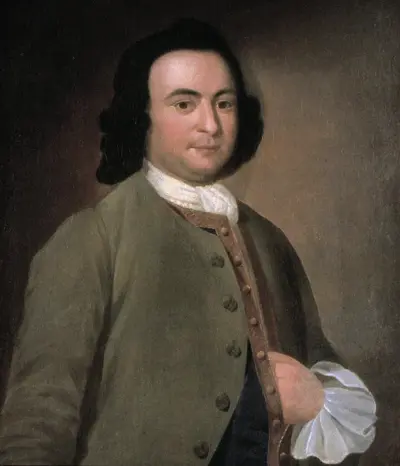
George Mason IV was an American planter, politician and delegate to the U.S. Constitutional Convention of 1787, one of three delegates who refused to sign the Constitution. His writings, including substantial portions of the Fairfax Resolves of 1774, the Virginia Declaration of Rights of 1776, and his Objections to this Constitution of Government (1787) opposing ratification, have exercised a significant influence on American political thought and events. The Virginia Declaration of Rights, which Mason principally authored, served as a basis for the United States Bill of Rights, a document of which he has been deemed a father.
