Sophocles Quotes
Bear up, my child, bear up; Zeus who oversees and directs all things is still mighty in heaven.
Sophocles. Electra. Translated by R. C. Jebb, Cambridge UP, 1894.


There is a striking similarity of speech between Menelik and the monarchs of Europe with respect to his Divine right of rule and dependence on God. Ethiopia, in contrast to the rest of Africa, was a Christian kingdom and had been so for centuries. Menelik mobilized his people and produced a humiliating defeat for the Italians at Adowa in 1896 who never forgot and returned to conquer Ethiopia in the early part of World War II.


This Koranic passage represents the Muslim belief regarding the Crucifixion. The deny that Christ was crucified or even killed in any manner. But they do believe that God raised him to Heaven as God sent his agents to save him from the pain and suffering. Those who thought that he was crucified were just repeating the error of some people who were confused as to who was crucified and who was not. In the dark and middle ages, many Christians were infuriated with the denial of the Crucifixion of Jesus and saw that as not only blasphemous but deserving of death to such a false believer. In more modern times, some Christians find the viewpoint insulting but there is more tolerance of views which Christian theologians simply regard as “error.” In the early history of Christianity there were some Christians who felt that God had enabled Jesus to escape crucifixion. It took some time for the Crucifixion to become settled Christian doctrine. Some Christians feel that those who denied the crucifixion could not have been Christians but there were a few people who believed in the rest of Christian doctrine except that Christ was crucified, believing as the later Muslims did that God raised him directly to heaven.

While most American leaders in 1776 advocated separation of church and state, others did not. There probably has been no better statement for religion in government than this one. Essentially, this view has been held by orthodox Christians, Jews, Muslims and has been at the heart of every theocracy such as Iran.


the Jews of Ancient Israel


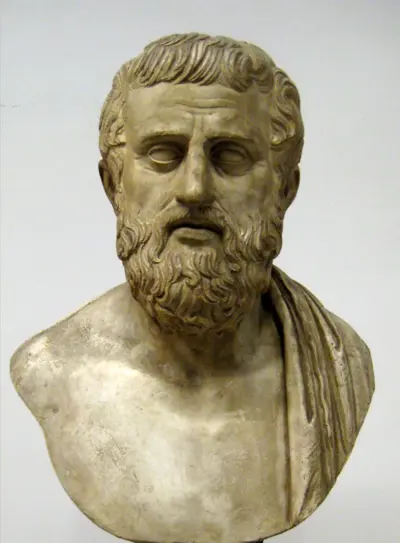
Sophocles (/ˈsɒfəkliːz/; Greek: Σοφοκλῆς, pronounced [so.pʰo.klɛ̂ːs]; c. 497/6 – winter 406/5 BC) is one of three ancient Greek tragedians whose plays have survived. His first plays were written later than, or contemporary with, those of Aeschylus; and earlier than, or contemporary with, those of Euripides. Sophocles wrote over 120 plays, but only seven have survived in a complete form: Ajax, Antigone, Women of Trachis, Oedipus Rex, Electra, Philoctetes and Oedipus at Colonus. For almost fifty years, Sophocles was the most celebrated playwright in the dramatic competitions of the city-state of Athens which took place during the religious festivals of the Lenaea and the Dionysia. He competed in thirty competitions, won twenty-four, and was never judged lower than second place. Aeschylus won thirteen competitions, and was sometimes defeated by Sophocles; Euripides won four.
