Percy Bysshe Shelley Quotes
If he is infinitely good, what reason should we have to fear him? If he is infinitely wise, why should we have doubts concerning our future? If he knows all, why warn him of our needs and fatigue him with our prayers? If he is everywhere, why erect temples to him? If he is just, why fear that he will punish the creatures that he has filled with weaknesses?
Percy Bysshe Shelley, 1792-1822, English Poet & Reformer, Questions about God, The Necessity of Atheism, 1811
Sourced by: Eigen's Political and Historical Quotations


At the time, it was very difficult for people who had been taught all their lives that God was directly responsible for the creation to accept the notion of evolution. At the time, there was not the overwhelming evidence proving Darwin’s theory that we have today. Nor did theologians realize that evolution and Darwinism were not inconsistent with the concept of a creator and supreme being. Nonetheless, there are still those who, like Agassiz, reject evolution and insist that the Biblical version of creation is literally true. See {586990}. Then there are people who have come up with the concept of Intelligent Design which originated with Agassiz though he never called it that. Most religious people today, in contrast, see no conflict in natural selection as described by Darwin and later proven, and the concept of God. They see the Biblical creation as metaphorical and natural selection as the product of an omniscient supreme being.


Amen ho tep IV. This Pharaoh adopted a monotheistic religion and imposed it upon Egypt where he could. However, as soon as he died, he was painted as a criminal for the heretical view of monotheism. It is not known whether he came upon the monotheistic concept independently or was influenced by the Jews who had first promulgated the idea. Some argue that Akhenaton was not a strict monotheist because for required the worship of the one God, Aten, but did not ban the worship of the other Egyptian gods though he personally, and his wife Nefertiti, were monotheistic.


While most American leaders in 1776 advocated separation of church and state, others did not. There probably has been no better statement for religion in government than this one. Essentially, this view has been held by orthodox Christians, Jews, Muslims and has been at the heart of every theocracy such as Iran.


Abraham Lincoln used this quotation when referring to the cost to the Southerners of the Civil War. See Quotation 644949.

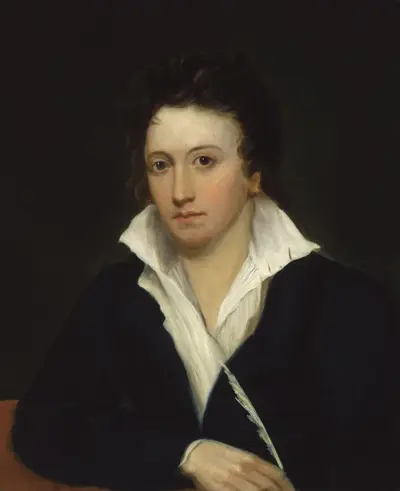
Percy Bysshe Shelley was one of the major English Romantic poets. American literary critic Harold Bloom describes him as "a superb craftsman, a lyric poet without rival, and surely one of the most advanced sceptical intellects ever to write a poem." A radical in his poetry as well as in his political and social views, Shelley did not achieve fame during his lifetime, but recognition of his achievements in poetry grew steadily following his death and he became an important influence on subsequent generations of poets including Browning, Swinburne, Hardy and Yeats.
