Alfred, Lord Tennyson Quotes
As nine months go to the shaping an infant ripe for his birth, So many a million of ages have gone to the making of man
Essentially, he was expressing a Darwinian idea in poetry. See Herbert Spencer {627582} for an even more specific argument for the same point.
Alfred Tennyson, 1809-1892, British Poet, Maud, 1855
Sourced by: Eigen's Political and Historical Quotations

Darwin’s work had polarized England into two camps. Spencer was one of the major public supporters of Darwin. Tennyson expressed a similar intuitive view a decade earlier {627586}. Spencer reasoned that if an egg cell and a sperm cell could produce a human in 9 months, why was it not plausible that the cell could become a human in hunreds of millions of years.

Actually no school teaches that. What they did teach when covering Evolution was that some modern apes (chimpanzees and bonobos) and humans were both descended from a common ancestor. The Congressman was at that point an evangelical Christian fundamentalist, Later, DeLay was convicted and sentenced to jail for money laundering and illegally spending and raising campaign funds. He was also reprimanded by the House Ethics Committee for unethical methods of fund raising for other earlier actions.


This was not only the case in 1852, but also true 150 years later. The only difference is that there is much more proof of Evolution, and there is a much smaller proportion of the population that questions Evolution as the fundamental mechanism by which all species have developed.

See President Clinton’s quotation at the same press conference {628400}.

The “brother of the wolf” refers to the evolution of the dog from the wolf which it now appears took place in just a relatively few generations.

This particular quotation is particularly distressful to some religious fundamentalists who not only will not accept that man evolved, but find it worse to accept that man is continuously evolving.


The Pope went on to state that Evolution was consistent with Roman Catholic doctrine, changing a position that had been taken by the Catholic Church and many fundamental protestant denominations. A few actually still reject evolution even after all the evidence and proof of the basic Darwinian theses. There is nothing in evolution that per se denies the existence of God or even that God created the universe and the mechanism of evolution. That is why the Catholic Church and so many Protestant Churches, Judaism, Buddhists, and so many other religions have no theological problem with evolution. Those religious groups who have difficulty with evolution are those fundamentalists (Protestants, Jewish and Muslims) who believe in the literal truth of Holy Scripture. They also assume that God designed each particular plant or animal species. Other religions hold that it was God who created the mechanism of evolution and that is how all the species developed and are developing today. Some religious evolutionists believe that evolution is God’s mechanism for perfecting man.
The Anglican Church of England like many others were originally threatened by the possibility of evolution. Darwin, himself a very religious man was castigated at the time. In modern days the mass of scientific evidence of evolution is overwhelming and most major religions have also learned that there is nothing inconsistent or threatening in this basic science. There are however some religious fundamentalists (mostly Christian and Muslim) who still reject this basic scientific notion, but this quotation represents most of the modern religious thinking.

This is a very important quotation. It is usually quoted by opponents of evolution, but almost always, the last sentence is omitted. Evolution nay sayers often claim that the wing of a bird or the human eye could not have evolved in gradual steps, but almost all scientists do not agree, In addition, science has learned, since Darwin’s era, that gradualism, while generally the rule in evolution, is not always required in that mutations can create relatively rapid evolutionary change. So can behavioral factors like the dog evolving from the wolf which occurred in just a few generations. However, if there were found an organism that was created in seconds, doubt would be cast on parts of the evolution concepts. However, no one has established that. The best opponents of science have done to maintain their position is to offer complex animals and organisms they believe are too complex to have been created gradually, but they have not been able to scientifically demonstrate that there is a single one.
Darwin believed at the time that large populations were critical to national success and development. The next 100 years would prove that large population was a handicap to progress and real growth of standard of living.

This quote was the beginning of the now discredited Eugenics movement. The essential problems were twofold: One was that someone had to decide which characteristics were desirable and undesirable, and there is wide difference of opinion that there is no way of resolving. Genocide is the result of Eugenics taken to extremes. Second, it the issue of human rights. No person, organization, or government has the right to tell a particular individual what genetic characteristics he/she may have with his/her children. Note that the issue of Population Control for size was also a part of the early Eugenics movement but is a totally separate issue. It is the voluntary verses the compulsory nature of Population control the is the critical ethical element.
The magnificent result of modern civilization has been to extend the average lifespan of humans by decades. What Galton called “weakly lives” are those that were eradicated by smallpox, bubonic plague, polio and hundreds of other diseases and risks where we have strengthened mankind and not simply succumbed to all the many natural dangers. At the same time however, civilization has added risks and dangers to human life. Automobile crashes, industrial accidents and the like. The balance has been well in favor of “civilization.”


Darwin initially did not use the phrase “survival of the fittest.” Herbert Spencer did in another context {627587}. With respect to evolution, some people mistakenly assume that this means that the strongest survive and the weak do not. But “fit” and “strong” are not synonymous. For example, the Lion is the strongest and top predator of the African Plain. An antelope, Thompson’s Gazelle, is tiny, not very fast, and has no defenses against the lions, cheetahs, leopards, hyenas, and wild dogs. He is the most eaten animal on the Plain. Yet this gazelle is growing in numbers and is thriving while the lions are becoming an endangered species. The Thompson’s gazelle are more fit for that environment because they breed so fast and at such a young age and have multiple babies. They are more fit than the lions because they breed more prolifically. Other animals are seemingly endangered in one environment (like beaver in the United States) but thrive in another (the Southern tip of Argentina)
The religious theology of the Church of England had accepted the fact based on Newton’s work, that the heavenly bodies followed a set of scientific laws that were themselves created by God. However, the Church could not accept the same principle when it came to the different species of humans and lower order animals. Each species they believe was created with all its characteristics by God directly and species could not change, develop, regress, go extinct unless God specifically ordained that. It was this inconsistency that Darwin was afraid would produce religious attacks on him and his notions of natural selection while astronomy and physics was treated very different theologically. Darwin delayed publishing his findings for 25 years hoping to find a religious atmosphere that would treat biology much as physics and astronomy. It didn’t come and finally he published and took the heat, which actually was not very great. With the exception of some religious fundamentalists, most other elements of society welcomed and supported Darwin’s ideas which today we realize were among the most important ever put forth in the world of science.

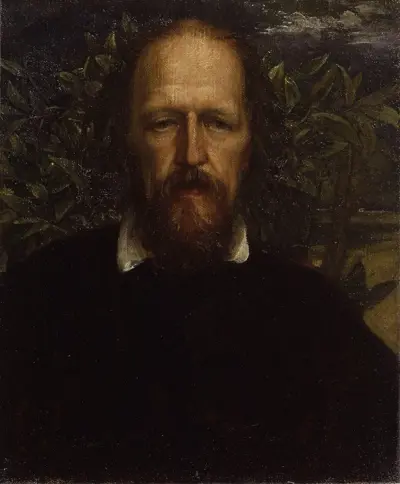
- Born: August 6, 1809
- Died: October 6, 1892
- Nationality: English
- Profession: Poet
Alfred Tennyson, 1st Baron Tennyson FRS was a British poet. He was the Poet Laureate during much of Queen Victoria's reign and remains one of the most popular British poets. In 1829, Tennyson was awarded the Chancellor's Gold Medal at Cambridge for one of his first pieces, "Timbuktu". He published his first solo collection of poems, Poems Chiefly Lyrical in 1830. "Claribel" and "Mariana", which remain some of Tennyson's most celebrated poems, were included in this volume. Although decried by some critics as overly sentimental, his verse soon proved popular and brought Tennyson to the attention of well-known writers of the day, including Samuel Taylor Coleridge. Tennyson's early poetry, with its medievalism and powerful visual imagery, was a major influence on the Pre-Raphaelite Brotherhood.
