Evan Bayh Quotes
As Indiana's governor, I balanced eight budgets, never raised taxes, and left the largest surplus in state history. It wasn't always easy. Cuts had to be made and some initiatives deferred. Occasionally I had to say 'no.'
Bayh, Evan. "Why I'm Leaving the Senate." The New York Times, 20 Feb. 2010, p. WK8.


This position angered the extreme conservatives and the extreme liberals who both opposed him in 2012. However, the majority of the state supported him and he was elected on this middle of the road platform with most of the activists against him.


This was a variation of the quotation of Canadian Minister of Finance, Jean Chretien, a decade earlier.

In 1964 the treasury secretary asked the president how to sell the proposed budget to Congress:


This is a particularly interesting historical quotation. It shows that when FDR was first elected, he had a classic view of deficit spending. However, above all, Roosevelt was a pragmatist and not an ideologue. Faced with the Great Depression that was not getting much better, Roosevelt turned around, changed his mind and policy about deficits and embarked on the “pump priming” approach of injecting substantial Federal spending into the economy and accepting the deficits in order to improve the situation which had been stagnant. FDR’s new policy staved off total disaster, but few remember that his great success was a total reversal of his earlier views.

Perry was one of a number of politicians who became opposed to deficit spending, and claimed that the public was not interested in the various projects. However, whenever any of these politicians proposed projects or programs to cut, there would be many citizens who would object vehemently. It was precicely because there was a constituency supporting all the government programs that politicians found it so hard to keep spending under control. Indeed, when others suggested terminating spending on programs and projects Perry liked, he objected as strenuously as most others.

Bloomberg was one of the few people who say the meltdown of 2008 coming. His principle of saving a surplus for spending in the downturns, which served New York so well goes against most Democrat and Republican politicians. If there is a surplus, the Democrats want to spend it. The Republicans want to cut taxes and return the surplus. Neither is prepared for an economic slowdown.

1st Viscount Snowden
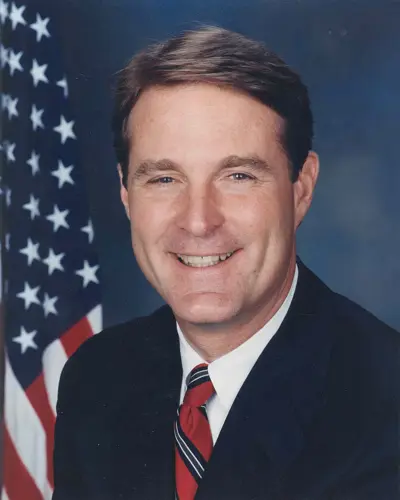
Birch Evans Bayh III is an American lawyer, lobbyist, and Democratic Party politician who served as a United States Senator from Indiana from 1999 to 2011 and the 46th Governor of Indiana from 1989 to 1997.
