Phil Gramm Quotes
Balancing the budget is like going to Heaven. Everybody wants to do it, but nobody wants to do what you have to do to get there.
This was a variation of the quotation of Canadian Minister of Finance, Jean Chretien, a decade earlier.
Phil Gramm, U.S. Senator (Republican and Democrat, TX), Interview, ABC This Week, September 16, 1990
Sourced by: Eigen's Political and Historical Quotations

Finding some accounting difference relieves the politician of the difficult choice between raising taxes or cutting expenses. That is why it has been so popular. Besides, it is a way of taking todays problem and pushing them off on politicians to come as the accounting gimmicks always have to be paid for at some point. Accounting gimmicks are not just small items. The Republicans, during the George W. Bush administration financed all the costs of Bush’s 2 wars by not counting any of the expenses on the budget and therefore they didn’t have to raise taxes to pay the expenses, which just got added to the national debt to be paid by future administrations.


After many years of deficit financing, Clinton finally produced a balanced budget and together with his Secretary, of the Treasury, Robert Rubin, actually developed an economy which was producing a huge annual surplus that would soon eliminate the national debt. However, when George W. Bush replaced Clinton after two terms, Bush was unable to manage the budget any better than the other aspects of the Presidency. He cut taxes dramatically and even after it was clear that the Clinton surplus was squandered, he continued tax reductions and even increased them while increasing government spending creating the biggest government in history and went from our largest surplus to our largest deficit in his 8 years.

This is a particularly interesting historical quotation. It shows that when FDR was first elected, he had a classic view of deficit spending. However, above all, Roosevelt was a pragmatist and not an ideologue. Faced with the Great Depression that was not getting much better, Roosevelt turned around, changed his mind and policy about deficits and embarked on the “pump priming” approach of injecting substantial Federal spending into the economy and accepting the deficits in order to improve the situation which had been stagnant. FDR’s new policy staved off total disaster, but few remember that his great success was a total reversal of his earlier views.

This position angered the extreme conservatives and the extreme liberals who both opposed him in 2012. However, the majority of the state supported him and he was elected on this middle of the road platform with most of the activists against him.


In 1964 the treasury secretary asked the president how to sell the proposed budget to Congress:

The Clinton budget was a very unusual one. He and Treasury Sectary Robert Rubin determined that the large deficit built up in the previous administrations and the high interest rate were competing with the private sector for investment capital. Therefore the budget raised taxes and took other steps to reduce the largest deficit then in American History. Virtually all of the Republicans saw disaster for the economy with this budget and even some of the fiscal conservatives from Clinton’s own party were opposed. The budget passed by a single vote in the House, and that started the largest economic growth period in American History. The economy became so strong that Clinton was able to produce a balanced budget, eliminate the Reagan deficit and produce more new jobs than any administration in American history. The prediction that the budget would cause the country to fail was, not only wrong, but the budget caused the nation to succeed, beyond what any thought possible. See {626772} for one of the warnings from his own party.


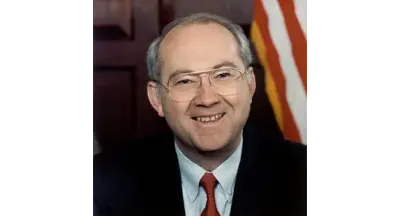
William Philip Gramm is an American economist and politician who represented Texas in both houses of Congress. Though he began his political career as a Democrat, Gramm switched to the Republican Party in 1983.
