James Carville Quotes
Anytime this President [George W. Bush] says he didn’t know something, I believe him. He’s got the benefit of the doubt on that.
James Carville, Presidential Campaign Strategist (Democrat), Speech, New York State Democratic Convention, May 22, 2002
Sourced by: Eigen's Political and Historical Quotations
_0_PostageStamp_47x47.jpg "Chairman of the Joint Chiefs of Staff Navy Adm. Mike Mullen gives an interview to John Dickerson during the CBS news program Face the Nation in Washington, D.C., July 5, 2009. During the interview, Mullen discussed the wars in Iraq and Afghanistan, North Korea's recent missile tests and his recent visit to Russia. (DoD photo by Mass Communication Specialist 1st Class Chad J. McNeeley, U.S. Navy/Released)")


The Senator was blaming President Clinton for not stopping the attack on the U. S. Cole as he knew that there were hostile Islamic extremists who were known to have threatened to attack American assets wherever they were. His view was that given that President Clinton should have acted overtly and/or covertly to prevent the attack. This failure for him was an impeachable offence. He argued that George W. Bush was assuming the Presidency and this laxness and incompetence that lead to the death of 17 American sailors would end. And then came 9-11 with the same level of general information and some even more specific information and 3000 Americans were killed. However, unlike Lott, almost no one blamed President Bush’s lack of leadership for the attack on the Pentagon and the World Trade Center. Lott seemed to forget his standard of presidential performance and did not criticize or urge the impeachment of the President of his own party.


George W. Bush had told the country that the reason for the Iraq War was that Iraq had developed weapons of mass destruction. After the invasion it was determined that there were no such weapons that had justified the war. Debate since has concentrated in whether the Bush administration had pressured the intelligence experts to provide the information they wanted to justify the war or whether the administration was misled by their intelligence agencies.

Prior to this question, Thomas had not been called on at a White House press conference for 3 years. After it, she was again avoided.

This first duty is more and more difficult in a large nation. Yet the expectation is so basic in almost every society, that it behooves the leader to learn as much as possible of the important aspect of his government and nation. This was one of the reasons that President George W. Bush was unpopular with many irrespective of his policies. He had little intellectual curiosity and did not spend much time learning and informing himself of things that were not of immediate necessity.


Abu Ghraib was the major prison in Iraq during the Iraq War. American military committed many crimes on prisoners ranging from murder to sexual humiliation. The actual perpetrators claimed that the higher ranks of officers knew what was ongoing and provided the policies, rules and culture of the prison. The president and the Vice President many thought were the officers responsible and violated the Uniform Code of Military Justice. Their administration had issued a legal memorandum that for the first time in American history would allow some kinds of torture of prisoners in the War on Terror. A few enlisted personnel were punished and a general was transferred but no senior military or civilian personnel were held responsible or punished.


Bush had stated when he was running for President that he was opposed to placing America’s nuclear waste in the Nevada mountain which was very unpopular with Nevada voters, but once in the Presidency he changed his position. The reason might have been that there was no backup plan to Yucca Mountain that Bush could select. It was wither Nevada or back to the drawing board with radioactive waste piling up each day.

And the New York press is probably the most difficult and cynical in the world.

Her immediate reference was to George W. Bush and his administration who had not been candid with the American people as to the reasons for the Iraq War


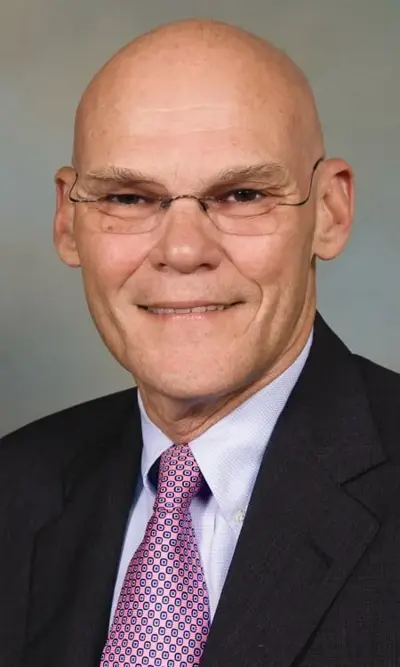
Chester James Carville Jr. is an American political consultant who has strategized for candidates for public office in the United States, and in 23 nations abroad. He is also a media personality with expertise in U.S. elections who continues to appear frequently on cable news programs, in podcasts, and in his public speeches.
