Calvin Coolidge Quotes
It is not for the President to determine criminal guilt or render judgment in civil causes. That is the function of the courts. It is not for him to prejudge. I shall do neither; but when facts are revealed to me that require action for the purpose of insuring the enforcement of either civil or criminal liability, such action will be taken. That is the province of the Executive … I feel the public is entitled to know that in the conduct of such action no one is shielded for any party, political or other reason.
Calvin Coolidge, 1872-1933, 30th President of the United States (Republican, MA), Statement announcing the appointment of two special prosecutors for the Teapot Dome scandal investigation, 1924
Sourced by: Eigen's Political and Historical Quotations


The public must be assured that prosecutorial decisions are made on legal and not political grounds.
In 2007 Inglesias was fired by the same George W. Bush Administration because they were unhappy that he was not prosecuting cases for which he claimed that there was no legal justification for but had potential political advantage for the administration.


Hatch was the chairman of the Senate Judiciary Committee at the time.


The government of Pakistan regarded this as seditious. The Government can fire judges at will and the military has the right to convene its own courts and try Pakistani civilians for certain alleged crimes by removing their cases from the civilian courts. Even when a Pakistani judge is not intimidated by the government or the military, the Islamic extremist fanatics often assassinate any public official who any one of thousands of fanatics feels is anti-Islamic.
In 2002 the corrupt Indonesian Courts ruled that a very solvent Canadian company Manulife was bankrupt so that others could get control. The international financial and political community wanted the Indonesian government to intervene and reverse the rulings, but historically the courts had no independence and had been tools of the government.

This constitution was written 7 years before the national constitutional convention. It shows that there was concern about the separation of powers in United States even before the Constitution was drafted. See {616750} for an even clearer statement of the separation of powers principle.


Obama wanted to follow transparency and openness in contrast to the previous George W. Bush Administratiom. He did do better, but he disappointed many of his supporters by not being totally transparent on many occasions.


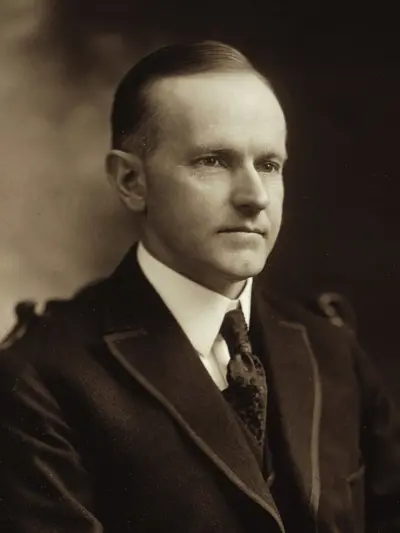
Calvin Coolidge was an American lawyer and politician who served as the 30th president of the United States from 1923 to 1929. A Republican lawyer from New England, born in Vermont, Coolidge worked his way up the ladder of Massachusetts state politics, eventually becoming governor of Massachusetts. His response to the Boston Police Strike of 1919 thrust him into the national spotlight and gave him a reputation as a man of decisive action. The next year, he was elected the 29th vice president of the United States, and he succeeded to the presidency upon the sudden death of Warren G. Harding in 1923. Elected in his own right in 1924, he gained a reputation as a small-government conservative and also as a man who said very little and had a rather dry sense of humor.
