Christo Quotes
And for every project, because it takes years, you can see the early drawings and collages as just a simple, vague idea, and through the years and through the negotiations of getting the permit, you see that every detail is now clarified.
Christo and Jeanne-Claude. "Interview: Christo and Jeanne-Claude." Academy of Achievement, American Academy of Achievement, 2004.


When Eisenhower first use this verb, many criticized him for his poor use of language. There was no such word at the time. Purists pointed out that something was final or it was not. There could not be a process of “finalizing”. Yet Eisenhower, with more experienced than most people developing at developing plans. He knew that in every large planning effort, there was a stage where the big decisions had been made and the plan details had to be amended to be consistent with the final decisions. When he called the process “finalizing” every person who had engaged in large planning efforts realized that this was an excellent term for a process that was a part of the planning process. To the distress of some grammarians and lingists, the term caught on and was used be virtually all planners thereafter. By the end if the 20th century, it was such a common and useful term that few people realized that before Eisenhower’s presidency the word “finalize” had never been used.


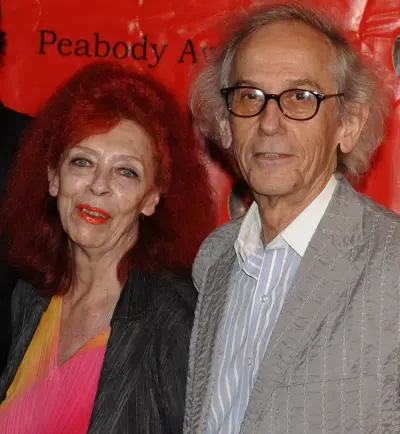
Christo Vladimirov Javacheff (1935–2020) and Jeanne-Claude Denat de Guillebon (1935–2009), known as Christo and Jeanne-Claude, were artists noted for their large-scale, site-specific environmental installations, often large landmarks and landscape elements wrapped in fabric, including the Wrapped Reichstag, The Pont Neuf Wrapped, Running Fence in California, and The Gates in New York City's Central Park.
