Adlai Stevenson I Quotes
And distasteful as this matter is, I must say bluntly that every piece of scientific evidence we have, every lesson of history and experience, indicates that a Republican victory tomorrow would mean that Richard Nixon would probably be president of this country within the next four years…. I say frankly, as a citizen more than a candidate, that I recoil at the prospect of Mr. Nixon as custodian of this nation’s future
Richard M. Nixon was, even before the Watergate scandal very disliked as both a politician and a person. However, this was one of the first major public figures who castigated Nixon, the man, in a major public address. Many followed, In this collection there are many more insults to Richard M. Nixon than any other politican.
Adlai Stevenson, 1900-1965, U. S. Congressman (Democrat, IL), Governor of Illinois, Democratic candidate for President, U. S. Ambassador to the United Nations, Election Eve Speech, 1956, Quotation Contributed by Bernard Benjamin Yamron from his Brown University 1995 PhD Dissertation, From Whistle-Stops to Polispots: Political Advertising and Presidential Politics in the United States, 1948-1980
Sourced by: Eigen's Political and Historical Quotations

The candidates had remarkably little experience in foreign affairs with the exception of Jon Huntsman and Newt Gingrich who in the extreme right wing ideology driving the Republican primary voters at the time had little chance of winning as they were too far to the left for the Republicans of the time.


In many recent Presidential elections many have thought a Vice Presidential candidate superior to the Presidential candidate. Such was also the case in 1900.

Smith had written to most of the then likely Presidential candidates of both major parties asking for their position on the Mormons who were facing persecution wherever they went. None of the politicians would make any satisfactory commitments. Smith took Direct Action and became the only major religious official to have run for the Presidency of the United States until Pat Robertson tried and failed in 2000. Smith’s assassination shortly thereafter cut his run for the Presidency short before it made much headway and politically he had no chance to affect the race.


Ohio was then supporting Warren G. Harding.


There was much distrust of Nixon even within the Republican party. The Democrats used that but the overwhelming popularity of Eisenhower carried the election for the Republicans.

After James Garfield became the Republican nominee for President, the defeated Conkling, refusing to run for Vice President, was asked whom he personally favored to run as vice-president with Garfield. Conkling replied:. President Garfield was assassinated six months later, and Arthur became the 21st President, to Conkling's dismay and chagrin. Compare Lyndon Johnson's "Power is where power goes."


In 2012, the Republican party had shifted to the right and was split between two factions. None of the 4 leading candidates had the support of a majority of the activist Republicans who vote in Primary elections. The then started to vie with each other for the most conservative elements of the party and did so by attacking the other candidates, making moral pronouncements and attacking President Obama. None of them offered any positive programs or solutions to the problems they claimed existed, and the attacks on the others were always that they were “really not conservative” and “could not get elected.” The result was that all the candidates negatives rose.

The Republican candidates were campaigning for the Primary election in Illinois. Lincoln was the first and the greatest of the Republican Presidents and a great liberal. The Republicans used to be the more liberal of the two American major parties and even referred to themselves as “radicals.” However the political parties flip flopped over time and in the 2012 primary campaign the Republican candidates were outdoing each other to show who was the most conservative and could trash liberals the most. Pointing out this contradiction between the politics of the first and most popular Republican President and the then current crop of contenders was a little embarrassing to some Republicans and a powerful anti-current Republican message to independents and Democrats.


The two insulting adjectives are used very rarely these days, but they were in common use at the turn of the end of the 19th century. “Briefless” when applied to a lawyer connoted little intellectual substance, as the important facets of a case are usually in an attorney’s briefs. “Jackleg” described a unprofessional, shoddy person with no standards of excellence. Eg. A person who made do with a temporary jack to hold up a large piece of furniture rather than a proper leg. These were very insulting terms at the time.
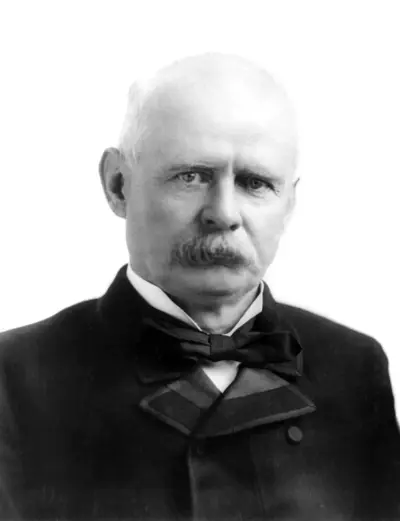
Adlai Ewing Stevenson served as the 23rd vice president of the United States from 1893 to 1897. Previously, he served as a representative from Illinois in the late 1870s and early 1880s. After his subsequent appointment as assistant postmaster general of the United States during Grover Cleveland's first administration (1885–1889), he fired many Republican postal workers and replaced them with Southern Democrats. This earned him the enmity of the Republican-controlled Congress, but made him a favorite as Grover Cleveland's running mate in 1892, and he duly became vice president of the United States.
