Siddhartha Deb Quotes
… an army of Gatsbys wanting not to overturn the social order but only to belong to the upper crust.
Many in India viewed them as radicals because they were demanding so much change and reform. However, Deb’s view was they only wanted sufficient change to allow them to move into the higher strata of India.
Siddhartha Deb, Indian Journalist & Writer, Description of the followers of Arindam Chaudhuri, Quoted in Foreign Affairs, May / June 2012
Sourced by: Eigen's Political and Historical Quotations


This was the prevailing view in Europe at the time; it was less so in the United States, where there were so many people who owned their own land and farmed it or developed manufacturing facilities and hence were the mind AND the limbs of the enterprises. However, the upper classes tended to agree with the European view. The difference between the American and European views was one of class mobility. In America “limbs” who demonstrated capacities of “mind” were much more able to advance in America. However, even into the 21st century here was a general feeling of the upper class that the “minds” made the critical and impactful decisions. This is one of the reasons that executive and CEO pay advanced so rapidly when compared with workers (the “linbs”).


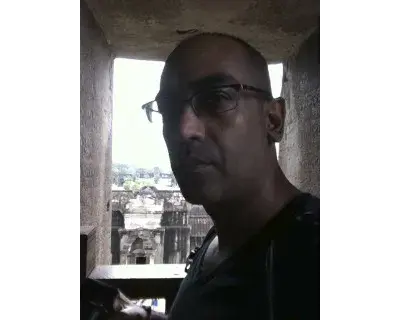
Siddhartha Deb (born 1970) is an Indian author who was born in Meghalaya and grew up in Shillong in northeastern India. He was educated in India and at Columbia University, US. Deb began his career in journalism as a sports journalist in Calcutta in 1994 before moving to Delhi to continue regular journalism until 1998. His first novel, The Point of Return, is semi-autobiographical in nature and is set in a fictional hill-station that closely resembles Shillong in India's Northeast. His second novel, Surface, also set in Northeast India, is about a disillusioned Sikh journalist. His first non-fiction book, The Beautiful And the Damned: A Portrait of the New India was published in June 2011 by Viking Penguin. He has also contributed to The Boston Globe, The Guardian, The Nation, New Statesman, Harper's, the London Review of Books, and The Times Literary Supplement. He currently teaches creative writing at The New School in New York.
