Peter Kreeft Quotes
Americans' deepest religion is often equality. The notion that Christ alone is God-superior, authoritative, supernatural-and that Christ's teaching and person is far greater than Buddha's, or Muhammad's, or Moses's, no matter how much great and good wisdom may be contained in those others, is scandalous.
Kreeft, Peter. Fundamentals of the Faith: Essays in Christian Apologetics. Ignatius Press, 1988, p. 74.


The Boers were generally furious because the British emancipated the Blacks that the Boers were holding as slaves. This hurt their economic interests. But according to this woman in the middle of it all, the worst of it was the insult of giving the Blacks political and functional equality. This was really very similar to most American Southern racist feeling during Reconstruction. Racism is very pernicious, in that the remedies always bring about insult and anger because the belief structure of slavery and discrimination must be based in a theory of inferiority.

His protest was focused on Middle East policies which he believed did not value the lives of Muslims as highly as Christians and Jews. The irony of this protest is that United States policy claims to value all life equally as do virtually all industrialized democracies. Omeish however is unusual among world Islamic leaders and politicians in that he values Christian and Jewish life as much as Muslim. Most, typically value Muslims almost exclusively and many advocate the killing of Christians and Jews.

It was drafted by John Adams. Note that there was freedom of religion for Christians and not others. Of all the colonies, Massachusetts had the worst record of religious intolerance with Puritans controlling everything. Rhode Island and Connecticut were created by religious dissenters from Massachusetts. Adams had all he could do to get the Christian sects on an equal footing ratified. The other colonies however, insisted to a total freedom of religion clause which became the First Amendment to the national Constitution. Adams himself was a kind of secular, cultural Christian who did not believe in the divinity of Christ and other Christian doctrine. See {592695} to illustrate this.

In 1856 Turkey and its Ottoman Empire was struggling with new ideas and attempts to reform before they were hopelessly engulfed by modernism. A set of reform laws were passed in February of 1856 which horrified the conservatives and traditionalists. But interestingly the orthodoxy of the Greek minority were unhappy with their legal elevation if it meant that all would be equal. The Minister’s description of opposition to the reforms was somewhat self-serving in that he opposed most of the reforms and wanted to maintain the traditional Islamic state.

Pen name: Jack Nipps

Those who claim that the founding fathers contemplated religion as a critical component of government often point to this article of the South Carolina Constitution. However, they ignore the almost simultaneous passage of the New York constitution as in {612166}. When the framers of the Constitution met in 1787 in Philadelphia the separation of church and state issue was not really resolved and awaited the Bill of Rights where the separatists won out.

Opponents of the strict separation of church and state use this quotation to support their view. However, Story herein describes public sentiment, not what was passed and ratified in the Constitution and Bill of Rights. See {614309} and {614310} for his statements from the same work that show that there was no question in his mind but that church and state are separated by the Constitution and the First Amendment.
The treaty, which was also ratified by the Senate, was actually drafted by Joel Barlow, the U. S. Consul in Tripoli. It was the first official statement of the United States on its religious basis or lack thereof.

Followers of the religious views of January Hus, 1369-1415 Hus was excommunicated and executed for his views that parts of the church were corrupt.

Head of the Sikh Religion. His teaching was that deeds determined the man, not the professed belief and that the existing religions turned man against man.

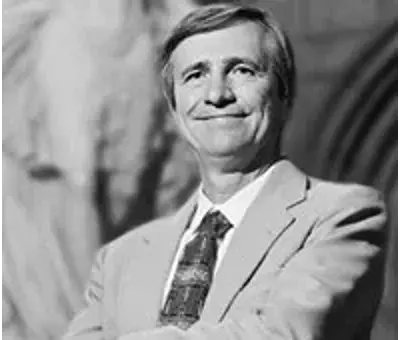
Peter John Kreeft (/kreɪft/; born 1937) is a professor of philosophy at Boston College and The King's College. A convert to Roman Catholicism, he is the author of over eighty books on Christian philosophy, theology and apologetics. He also formulated, together with Ronald K. Tacelli, "Twenty Arguments for the Existence of God".
