Jane Austen Quotes
All the privilege I claim for my own sex ... is that of loving longest, when existence or hope is gone.
Austen, Jane. Northanger Abbey and Persuasion. John Murray, 1818.


Jinnah was a modern Islamist who saw the role of females in a modern context. He, like the Indian Hindu leaders were in a sense products of the West and Western government and education. He would be very surprised that in his Pakistan men can murder their female relatives who they believe have dishonored the family, or that women would not be educated in the Madrassas, or that authorities could sentence a female relative of a man deemed guilty of seduction to be gang raped, but that is what happens in modern Pakistan. Jinnah and many of the early leaders believed that their new government could modernize Islam but the control and influence went the other way. Pakistan became a religiously dominated autocracy rather than the democracy that Jinnah foresaw.

A Polymath is a genius in a number of different subjects. She learned her mathematics initially by listening in on her brother’s tutoring sessions. She published in mathematics, geography, physics, astronomy, and biology. Although her first husband was totally unsupportive as indicated in the quotation, after his death, her second husband was a great asset to her and assisted her in many ways.

SNCC had been formed to promote equality, but race and class were the issues, not gender. Many of the women left SNCC and proceeded separately to start a women’s movement.

Most modern feminists would not agree with this quotation by one of the great early femonists.


The party was not yet ready for women voting. Hardie resigned as Party Leader. In 1910 he agreed to return as Party Leader and the party was then not in opposition to women’s suffrage although many members were still against women voting.


Given the time, this was an amazing demand. Fuller preceded all the more famous American feminists and was an inspiration to them.


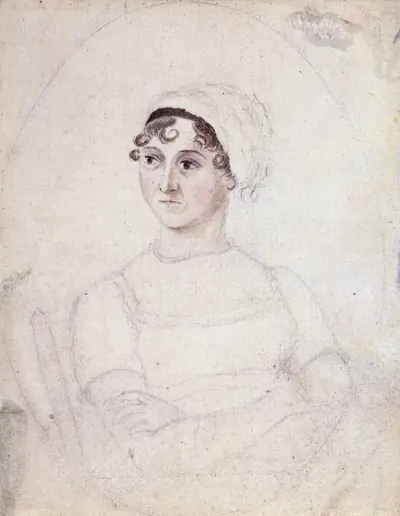
Jane Austen was an English novelist known primarily for her six major novels, which interpret, critique and comment upon the British landed gentry at the end of the 18th century. Austen's plots often explore the dependence of women on marriage in the pursuit of favourable social standing and economic security. Her works critique the novels of sensibility of the second half of the 18th century and are part of the transition to 19th-century literary realism. Her use of biting irony, along with her realism, humour, and social commentary, have long earned her acclaim among critics, scholars, and popular audiences alike.
