Geneva Convention Quotes
Women shall be treated with all the regard due to their sex and shall in all cases benefit by treatment as favourable as that granted to men
Geneva Convention, October 21, 1950 Article 14
Sourced by: Eigen's Political and Historical Quotations


This is a remarkably modern statement for the time.

Jinnah was a modern Islamic reformer as this quotation demonstrates. Pakistan is not as backward as most of the Arab Islamic countries on the role of women. There are many Pakistani businesswomen and professionals. Pakistan has even had a female president. However, the fundamentalist Islamic forces that dominate the culture constantly preach and advocate the literal interpretation and following of Sharia which calls for a traditional, subservient traditional role for women; “honor killings” are common; “a rapist cannot be convicted on a female victims testimony; there are calls for the killing of adulteresses and other primitive throwbacks. Jinnah’s vision has not come to pass yet.

She was chiding the Egyptian military who in the Arab Spring, turned on demonstrators and soldiers in the middle of the central square stripped a female demonstrator half naked and beat her badly;

Jinnah was a modern Islamist who saw the role of females in a modern context. He, like the Indian Hindu leaders were in a sense products of the West and Western government and education. He would be very surprised that in his Pakistan men can murder their female relatives who they believe have dishonored the family, or that women would not be educated in the Madrassas, or that authorities could sentence a female relative of a man deemed guilty of seduction to be gang raped, but that is what happens in modern Pakistan. Jinnah and many of the early leaders believed that their new government could modernize Islam but the control and influence went the other way. Pakistan became a religiously dominated autocracy rather than the democracy that Jinnah foresaw.

Stowe persuaded Lockwood to stand for President. They tried to recruit a man for the Vice Presidential nomination, and when they could not, Stowe became the first female to become a Vice Presidential candidate.

This remarkable statement was written in about 1840 and there was probably then few people of either gender who would think such a thing possible.


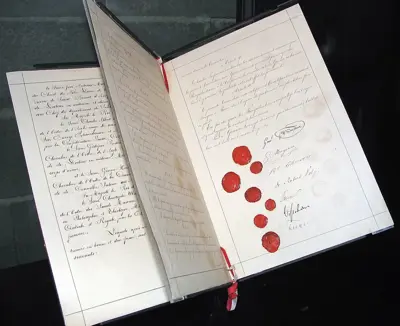
The Geneva Conventions comprise four treaties, and three additional protocols, that establish the standards of international law for humanitarian treatment in war. The singular term Geneva Convention usually denotes the agreements of 1949, negotiated in the aftermath of the Second World War (1939–1945), which updated the terms of the two 1929 treaties, and added two new conventions. The Geneva Conventions extensively defined the basic rights of wartime prisoners (civilians and military personnel), established protections for the wounded and sick, and established protections for the civilians in and around a war-zone. The treaties of 1949 were ratified, in their entirety or with reservations, by 196 countries. Moreover, the Geneva Convention also defines the rights and protections afforded to non-combatants. The Geneva Conventions are about soldiers in war; they do not address the use of weapons of war, which are the subject of the Hague Conventions, and the bio-chemical warfare Geneva Protocol.
