Manuel Azana Quotes
All the convents in Madrid are not worth the life of a single Republican.
The archbishop of Toledo, Cardinal Pedro Segura, had put the Catholic Church in the midst of the political struggle siding with the Fascists against the Republicans. In retaliation, several Catholic churches and convents were burned. The Cardinal and others wanted to take severe reprisals against the Republicans.
Manuel Azana, 1880-1940, Spanish President & Prime Minister (Republican), May 1931
Sourced by: Eigen's Political and Historical Quotations


It was this perverted logic that led the Nationalists to adopt a policy of killing lower class and poor workers. Though there were communists in Spain at the time, most of the peasants and the abject poor had little or no political philosophy or education. More sophisticated Nationalist apologists observed that the ultra poor were easily enlisted into left-wing causes like communism, so their elimination before the fact was a preventive technique.

Most historians agree that by “superstition,” Grant was referring to the Catholic Church, which had been steadily growing will more and more immigrants arriving in America. There was great hostility between Protestants and Catholics at the time.


These were the most terrible and restrictive laws against Jews who would be hunted down and forced to accept Christianity. The Visigothic laws were a combination of Visigothic tradition and the codification by Catholic Clerics. Many scholars have traced the terrible policies and practices against Jews by the Spanish throne and the Inquisition 500 years later to these earlier Spanish Visigoths and their formal legal structure. This is the most formalized and sophisticated compendium of laws of the so-called “barbaric peoples” of Europe. The compilation was in many ways a documentation of the traditional laws of the Visigoths that had evolved over hundreds of years.

While this was his opinion, it was never issued in a Papal Bull or had the force of Catholic law. Meanwhile, almost all of the socialist movements in the West have had Catholics in their leadership and many democrats of modern times would have been considered socialist. Many countries with high proportions of Catholic voters have elected socialist governments in secluding Spain and Italy.

During the Spanish Civil War, the Roman Catholic Church—the only major Christian Church in Spain—sided with the Fascists in overthrowing the elected government and ousting the king. The church also supported the German Nazi bombing of undefended Spanish towns where there were concentrations of Republicans supporting the elected government. While there were a few Catholic worker priests on the Republican side, the church buildings and the hierarchy of the Church was part of the Fascist axis. Therefore churches were burned whenever possible, often with the help and participation of the Catholic worker priests many of whose churches had been bombed. Although Durruti often said this, he did not originate it; Peter Kropotkin did.


Moody was an avid Protestant Evangilical. The reference to the "reign of terror" was not to the French Revolution per se but to a national calamity of the severity and magnidute of the French Revolution sd God's wrath would be triggered if more AMericans were not Evangelized. What is particualry interestting is by 1886 Communism had already developed a bad reputation in the part of many religious fundamentalists and considered a sin of the first order such as adultery. The red scare was alive and well. Ironically, Moody and most other anti-communism evengelicals were not hostile brecause of Karl Marx's economic or historical views and theories, but rather Marx's, Engels', and other early Communitists hostility to organized religion was the main casue. The economic adn political opponents of Communism enlisted the aid of as many religious people was possible by emphasing "Godless Communism" and the vast majority of Americans at the time, if they knew anything about Communism at all, it was that the communists were hostile and opposed to religion.


The United States was governing the Philippines after the Spanish American war. Most Filipinos were Roman Catholic and before the Americans even took over there were a large number of Catholic priests who were sexually active in different ways. Many had housekeepers/concubines, others had relations with women who they learned were vulnerable in the confessional. Still others were homosexuals and preferred young boys. Americans were much more prudish than many other countries where lecherous men of the cloth had a long history. The American authorities simply removed these priests not realizing that there was still with many countries laws and traditions that left the disciplining of clergy, even for criminal matters, to the religious authorities. The Catholic Church was then very defensive about sexually predatory priests. The Vatican made many protestations that the U. S. Government were interfering with the prerogative of the church to run its own religious affairs. American Catholics and Catholic leaders also complained about the religious “interference”. Roosevelt knew full well that the Church had done little or nothing about the Filipino lecherous priests before the Americans took over, and he had no confidence that they would do so in the future. And he was adamant that religious officials should be subject to the civil law and civil authorities for behavior of all citizens with no exemptions for clergy. When the Catholic church realized the poor PR that they were getting from the worst priestly offenders, it tended to back off overt confrontation, and came to a diplomatic agreement with America over the issue. Most countries resolved this issue the way Roosevelt and the Americans did. Clergy were subject to civil law in all things.

From the latter part of the 20th century onward, religious nationalism was no longer a force for most religions and nations except Muslim countries. It was the only religion left where a large proportion of the adherents saw no distinction between the religion and the government. Nations that had separation of church and state were not conducive to the extreme fundamentalist form of Islam where the Secular Leader and the Religious leader was to be embodied as a single person. As a result Islamic religious nationalists argued for a Theocracy and at times fought for it with violent means. The secular government typically, to curtail the violence and prevent a religious takeover, often outlawed the extreme religious Islamic parties. While Aslan cites the Muslim Brotherhood failure in Egypt as a desirable outcome, the only way the other forces of Egyptian society could prevent the Islamists from taking over turning the country into a theocracy was to forcefully repress the extremists. The Turkish outcome was much better, but there was the threat of repression of the Justice and Development Party when it won a majority control of the government. There were explicit threats that if it tried to weaken the secular nature of the government as Ataturk had formulated it, the military would come “out of the barracks” and oust the government as they had done before. There were nations like China which persecuted religions such as certain forms of Christianity, but those religions were not fighting for religious nationalism. They only wished the freedom to practice their religion and had no program or theology that argued for Christianizing the government. The Tamil Hindus of Sri Lanka did not want a Hindu government and were perfectly free to practice their religion. The problem was that they felt that there was systemic social and economic discrimination against the Tamils and they fought for independence—not of a Hindu state, but of a secular, nondiscriminatory state of equal opportunity.
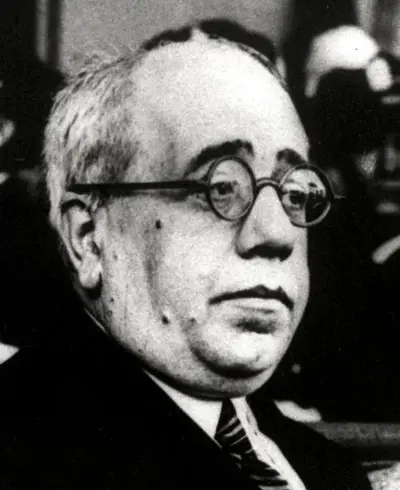
Manuel Azaña Díaz was a Spanish politician who served as Prime Minister of the Second Spanish Republic (1931–1933 and 1936), organizer of the Popular Front in 1935 and the last President of the Republic (1936–1939). He was the most prominent leader of the losing Republican cause during the Spanish Civil War of 1936–1939.
