Robert Browning Quotes
All service ranks the same with God,- With God, whose puppets, best and worst, Are we: there is no last nor first.
Browning, Robert. "Pippa Passes." Bells and Pomegranates. No. I. - Pippa Passes, Edward Moxon, 1841, p. 16.


This quotation illustrates that a narrow orthodox view of Islam is not the only one in Arab nations. Khaled is not an obscure cleric, but a popular television personality. While his views are considered heresy by many orthodox Muslims, the narrow view is by no means universal. Orthodox Islamists believe that God has commanded that all mankind be Muslims and the ones who are not are either ignorant so need to be “educated”, or evil and therefore should be killed. However, Muhammad ordained that an exception should be made for “Children of the Book”—Jews and Christians who revere the Old Testament. This was at a time when Christians would not allow any other form of worship but Christianity. Christianity, Judaism and most other religions have become tolerant of other religions and allow open alternative worship. Islam which early on led the way to tolerance, has in many countries gone back to the intolerance that existed amongst many Christians at the time of Muhammad.


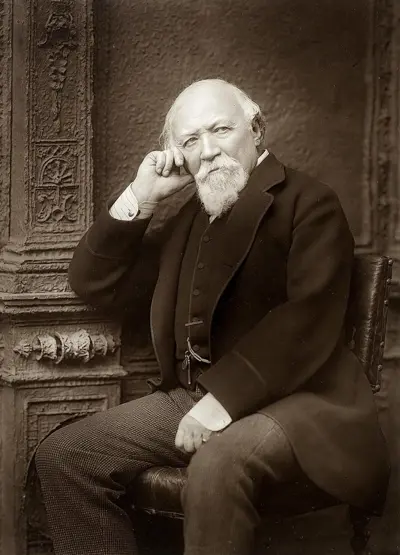
Robert Browning was an English poet and playwright whose dramatic monologues put him among the foremost Victorian poets. His poems are noted for irony, characterization, dark humour, social commentary, historical settings and challenging vocabulary and syntax. His career began well, but shrank for a time. The long poems Pauline (1833) and Paracelsus (1835) were acclaimed, but in 1840 Sordello was seen as wilfully obscure. His renown took over a decade to return, by which time he had moved from Shelleyan forms to a more personal style. In 1846 Browning married the older poet Elizabeth Barrett and went to live in Italy. By her death in 1861 he had published the collection Men and Women (1855). His Dramatis Personae (1864) and book-length epic poem The Ring and the Book (1868-1869) made him a leading British poet. He continued to write prolifically, but his reputation today rests mainly on his middle period. By his death in 1889, he was seen as a sage and philosopher-poet who had fed into Victorian social and political discourse. Societies for studying his work formed in his lifetime and survived in Britain and the United States into the 20th century.
