James Tallmadge Jr. Quotes
All men were blessed with equal right and privilege and that liberty was the birth right, the Palladium of every individual…. Of all the specious reasons for importing and holding in bondage the native African, none was more absurd than the idea that one who was formed with a dark complexion is inferior to him, who possesses a complexion more light. Should a thing like this be admitted as general mankind would be at once resolved into an unusual monarchy with some weak puny white-faced creature for the sovereign, and those whose color was furtherest removed from white, though a Newton or...a Washington would be reduced to the most abject slavery…. Such claims could never be admitted by any except those who are prompted by avarice to encroach upon the sacred rights of their fellow men, and are vainly endeavoring to appease a corroding conscience.
This is a particularly memorable quotation for several reasons. First the address was given by a young senior student who would later be a member of Congress, a effective abolitionist, and the author of various pieces of legislation that vexed the South. What is even more memorable is that the oration was given at an Ivy League College Official Graduation. The Ivy league schools, despite their reputation for intellectual freedom, generally were very adverse to any discussion about the slavery issue as it would cause too much passionate contention. See {621346} for an example at Harvard. In addition, Brown University was in Providence RI, where the economy depended in substantial part on slavery. The Co-Founder of Brown was himself a slave trader {622028}. This was one of the early American anti-slavery orations.
James Tallmadge Jr., 1778-1853, U. S. Congressman (New York), Lieutenant Governor of New York, President of New York University, Senior Graduation Speech, “Oration upon the infringement of the rights of man”, Brown University, September 5, 1798
Sourced by: Eigen's Political and Historical Quotations

Written when he was the President of Harvard. Harvard and most of the established schools, though pretending to free inquiry in all academic matters, could not handle the abolition question. Princeton, was so racist that they not only were silent about slavery but did not admit a Black student until the Second World War.There were exceptions. Oberlin College was a critical stop on the Underground Railroad, and that institution alone graduated more than one third of all the Negro college graduates in America for the entire 19th century. In 1790, the top student of Brown University gave a commencement address that was a searing indictment of slavery {622025} despite the fact that the school’s namesake was an active slave trader.

The cotton industry and slavery were a very important part of the economy of Providence, RI. The Rhode Island cotton mills were supplied by Southern cotton produced by slaves and carried from the South on Rhode Island ships. Many of the southern slaves were kidnapped from Africa from Rhode Island slave trading ships. When the slave trade was made illegal, Brown was the first slave trader prosecuted. His brother, Moses Brown, a vehement abolitionist was one of the men who brought the prosecution.


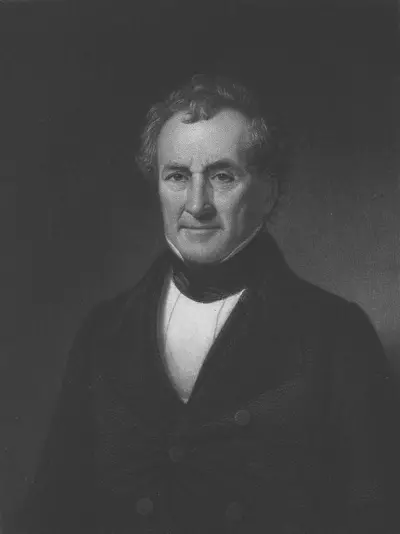
James Tallmadge Jr. was a United States lawyer, and politician who served as a United States Representative from New York's 4th congressional district.
