Maria W. Stewart Quotes
Many think, because your skins are tinged with a sable hue, that you are an inferior race of beings; but God does not consider you as such. ... he hath made all men free and equal. Then why should one worm say to another, 'Keep you down there, while I sit up yonder; for I am better than thou?
Stewart, Maria W. "Religion and the Pure Principles of Morality, the Sure Foundation on Which We Must Build." Maria W. Stewart, America's First Black Woman Political Writer: Essays and Speeches, edited by Marilyn Richardson, Indiana UP, 1987, pp. 28-42.


The power structure of England and the English administrators of South Africa were strong advocates of racial equality at the beginning of the 19th century. They insisted on equal administration of law. However the Boer white population could think of nothing more absurd. In a sense the Boers were much like the Southern Whites at the same time. The South African government however could not enforce its equality policies in the rural area – the majority of South Africa at the time. When democracy and self rule came to South Africa, the racially moderating force of the English was minimized and the majority of South Africans wanted a racially segregated society. Apartheid resulted.


The issue of slavery which had been suppressed in Congress for the first decades of the nation broke out when Missouri statehood was considered. By previous agreement, slavery was not even discussed in Congress but the time period elapsed. Tallmadge not only proposed that no more slaves could come into Missouri {613176} but most shocking to the Southerners was that every person born in the new state would be free at the age of 25. In a generation, there would be no more slavery in Missouri and there would be no economic compensation for slave owners at all. The House of Representatives accepted the amendment, but it failed in the Senate. At that time, Senators were not elected by voters but were appointed by the state legislators and the Southern slave states had a disproportionate share of the senate from a population point of view. But what this quotation shows clearly that a majority of the country in 1819 were opposed to slavery and were willing to end it without compensation.

This is a particularly memorable quotation for several reasons. First the address was given by a young senior student who would later be a member of Congress, a effective abolitionist, and the author of various pieces of legislation that vexed the South. What is even more memorable is that the oration was given at an Ivy League College Official Graduation. The Ivy league schools, despite their reputation for intellectual freedom, generally were very adverse to any discussion about the slavery issue as it would cause too much passionate contention. See {621346} for an example at Harvard. In addition, Brown University was in Providence RI, where the economy depended in substantial part on slavery. The Co-Founder of Brown was himself a slave trader {622028}. This was one of the early American anti-slavery orations.

In the 1930s African Americans who traveled were subject to countless humiliations whenever the sought hotels, rooming houses, restaurants and other accommodations. Gas stations would not allow them to use bathrooms and they were reduced to using open fields. Traveling and vacationing was, for Blacks, humiliating. Wikipedia: “Green reviewed hotels and restaurants that did business with African Americans during the time of Jim Crow laws and racial segregation in the United States. He printed 15,000 copies each year. In the 1930s, Green began his work by compiling data on stores in the New York area that accepted black travelers, and published his first guide in 1936. Similar guides had been published for Jewish travelers, who sometimes faced discrimination. Green's guide was so popular that he immediately began to expand its coverage the next year to other US destinations, adding hotel and restaurants as well.”


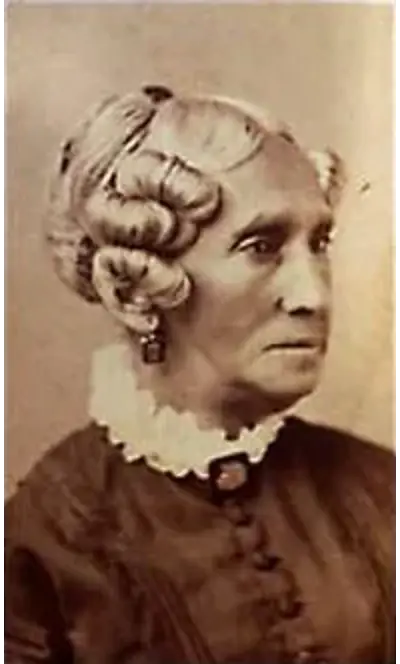
Maria W. Stewart (née Miller) was a free-born African American who became a teacher, journalist, lecturer, abolitionist, and women's rights activist. The first known American woman to speak to a mixed audience of men and women, white and black, she was also the first African-American woman to make public lectures, as well as to lecture about women's rights and make a public anti-slavery speech.
