Black Hawk Quotes
After the battle is over, they [whites] retire to feast, and drink wine, as if nothing had happened; after which, they make a statement in writing, of what they have done – each party claiming the victory! And neither giving an account of half the number that have been killed on their own side.
Black Hawk, 1767-1838, Sac and Fox Indian Chief, 1834
Sourced by: Eigen's Political and Historical Quotations

This was his most famous speech.


earlier given as 100,000 dead The CIA had actively financed and supported a Coup by General Sukarto in Indonesia. There were horrible atrocities in Eastern Java and other areas where the populations were sympathetic to and would likely vote for the communists. Not only did the CIA do nothing to restrain these atrocities, but the only planes that were engaged were unmarked military jets flown by CIA contract pilots who bombed and strafed many of the Indonesian villages. Originally Ambassador Green had reported that “only” 100.000 Indonesians were killed (in just a few days), but as this testimony showed, the deliberate slaughter involved many more and some historians claim that there were even more murders. This one engagement probably involved many more deliberate killing of civilians in a few days than took place in the entire Vietnam war. However, since the hearings were classified, the Senators were not allowed to tell anyone. Even in the classified hearings Ambassador lied to the Congress about the CIA involvement. No one, including the CIA pilots who bombed the defenseless villages, was ever brought to justice for the killing of the 500,000+ civilians.


“Tragedies” was used as a euphemism for incidents of “war crimes” or atrocities committed by individuals or small groups contrary to the official policy of the military or the country. McCain had personally been the victim of those committed by the Vietnamese in the Vietnam War. He was not surprised when some American and Canadian soldiers were guilty of some of these in the Afghanistan War.

This may have been the origin of the famous Stalin later quotation of very similar sentiment {616657}. No one is certain if Stalin had ever seen this work. Or he might have come upon it independently. The original source does not mention Massigli by name. However the description of the “Diplomat vom Quai d’Orsay” fits Massigli and his expertise so we attribute it to him. However, he was not the first to express this idea. The Anglican Bishop of London, Beilby Porteus, appears to have been the earliest—See {627489}.


The Philippine-American War was terribly brutal. In response to insurgent atrocities against American soldiers, some of the Americans also adopted brutal tactics including torture and mutilation. Washington had heard stories of this improper behavior in the part of some American troops and instructed the senior officers to investigate and discipline the men if the reports were true. Unfortunately some of the senior officers covered up the illegal and criminal behavior of some Americans. This quotation was taken from a New York Times report on a representative of the Red Cross who went to the Philippines at the invitation of the insurgents. He generally found serious atrocities by some of the soldiers on both sides but by no means all of the combatants. General Otis, the U. S. Commander tried to keep Blake out, and had him detained away from the battle areas for some weeks where he was “educated” about the enemy atrocities. Finally Blake got to the field and reached the insurgent commander who had invited him. His report generally praised the American troops, but spared no details when there were guilty of atrocities.

Clark’s men had English Colonel Hamilton under siege by making him think there were many more Americans in Clarks army than the real 180 or so. He tried to get Hamilton to surrender by threatening if they had to take the fort they would treat Hamilton and the British as murderers—Hamilton had paid hostile Indians for American scalps. At that point a party of Clark’s men arrived with 4 or 5 Indian prisoners who had been captured raiding
civilian farms. After the Indians were executed, Hamilton agreed to surrender.
This has been true in just about every conflict. In WWII however, there were a highly disproportionate ration of atrocities with those of the axis forces dwarfing those of the U. S. and its allies. Further, after the war, those allied atrocities that did take place were published. In addition, one basic difference is in the policies of the fighting forces and their governments as opposed to individual actions by soldiers. In WWII, the allied atrocities were of the latter type, but the axis atrocities involved both.


by recent Southern military losses Ironically, it was the Southern States and Southern politicians who had ever since President Andrew Jackson, illegally appropriated most of the Indian lands. It was the Supreme Court who ordered Jackson not to remove the Cherokee, but he and the other Southerners did so anyway with mild protest coming from the North. Neither section treated the Indians fairly, but the South had been much worse.


He was a brutal officer who by modern standards committed various war crimes.

This is one of the most classic military quotations--one of the great examples of spin.


The French manipulated the war news more than the other nations but nations all did to some extent tending to exaggerate the positive and minimize the negative.

1st Viscount Grey of Fallodon. The first published version of this prescient quotation appeared.


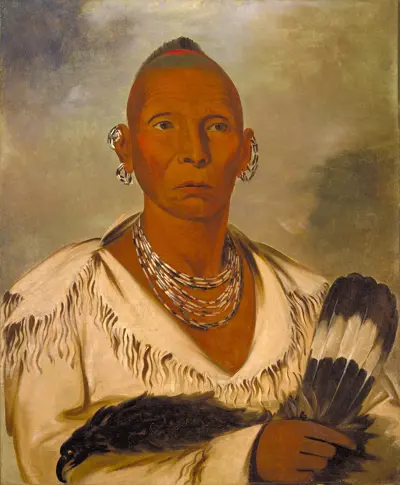
Black Hawk, born Ma-ka-tai-me-she-kia-kiak, was a band leader and warrior of the Sauk Native American tribe in what is now the Midwest of the United States. Although he had inherited an important historic sacred bundle from his father, he was not a hereditary civil chief. Black Hawk earned his status as a war chief or captain by his actions: leading raiding and war parties as a young man and then a band of Sauk warriors during the Black Hawk War of 1832.
