Plutarch Quotes
After he routed Pharnaces Ponticus at the first assault, he wrote thus to his friends: "I came, I saw, I conquered.
Plutarch. Plutarch's Lives. Translated by Bernadotte Perrin, vol. 7, Harvard University Press, 1919, p. 557.

He polished the army but had little strategic appreciation for the strengths of the Union, its industrial capability, logistical capability, and its greater manpower pool. He was reluctant to fight, and when he did, was happy to take territory, that meant little, when Lincoln and other strategists argued that the object should be to destroy and degrade the Confederate Army and the Confederate capacity to support the Army and continue to make war.

The General refused. He had already achieved a strategic victory and it was only a matter of time when the Dutch would withdraw on their own as their supply lines were cut off and the populations wanted them out.


General Shafter had a major attack of Gout, a terribly painful disease for which there was little relief at the time. As a result he had little involvement in the battle of Santiago at the most critical period. Crassus was an incompetent general in a famous Roman battle.


Not understanding this point has been the cause of much difficulty for military leaders from the war of 1812 through the Iraq war, the success or failure of the effort depended on a successful peace.


See a similar sentiment by Tallyrand

During the Civil War, General Joseph Hooker castigated the President and called for a dictator to assume power:


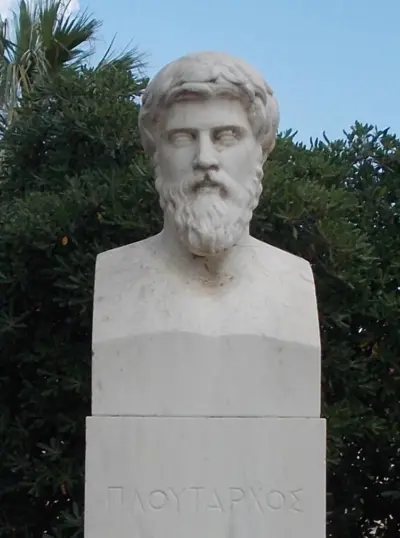
Plutarch (/ˈpluːtɑːrk/; Greek: Πλούταρχος, Ploútarchos; Koine Greek: [ˈplutarkʰos]; AD 46–after AD 119) was a Greek Middle Platonist philosopher, historian, biographer, essayist, and priest at the Temple of Apollo. He is known primarily for his Parallel Lives, a series of biographies of illustrious Greeks and Romans, and Moralia, a collection of essays and speeches. Upon becoming a Roman citizen, he was named Lucius Mestrius Plutarchus (Λούκιος Μέστριος Πλούταρχος).
