Sun Tzu Quotes
To win victory is easy; to preserve its fruits, difficult.
Sun Tzu ~544-496 B.C., Ancient Chinese Military Strategist, Quoted in Thomas E. Ricks, Fiasco- The American Military Adventure in Iraq
Sourced by: Eigen's Political and Historical Quotations


The proverb dates from the Samurai era of Japan where the Samurai in battle wore metal and leather protective helmets. These were secured to their heads by a tight helmet chord. Many societies, after a war and desiring peace would reduce the spending for the military, eliminate conscription, and weapons production. The result often was a more attractive target for enemies wanting land or revenge. Thus, the proverb warns that immediately after a victory, prepare for the next battle and do not let your guard down.
Versions of this proverb appear in many countries. Although the proverb originated in reference to military affairs, it is applicable to politics, leadership, management, and in the modern world is beginning to be applied to individuals and their careers and futures.

Serbian Prime Minister Slobodan Milosevic


America had more than one ancient exemplar of the problem of the Iraq War. The great Carthaginian General Hannibal was brilliant in war but tended to lose the benefits of victory by lack of planning and poor administration and geopolitical strategy. He could never “win the peace.” See {589454} for his view of the two phases of conflict.


The General refused. He had already achieved a strategic victory and it was only a matter of time when the Dutch would withdraw on their own as their supply lines were cut off and the populations wanted them out.

The South could not replenish their lost arms and munitions nor could they replace most of the men wounded, killed or taken prisoner. The Union could do both. Therefore as long as the Union army inflicted casualties, it mattered little who won which battle as long as the fighting was in the South. This critical strategic reality was never appreciated by the Union Generals who were generally reluctant to take large casualties. When Grant and Sherman finally were able to set the strategy of attrition in operation, the Union actually won most of the battles though he and Grant took very high casualties. The casualties of the Confederates were generally higher but they did not have to be for the Union to win. The Civil War was a strategic form of suicide. Ironically, at a few points the rebellion might have succeeded because of the incompetent and timid Union military leadership at the beginning of the war.


See {637982} for one of the major reasons.

Note that even then, De Gaulle’s nationalist ego focused not only on glory but glory that need not be shared. It was always a great strength and a great weakness for him. He and many French officers were so fixed on the glory of beating the Germans, that they did not focus on their ½ million casualties and were not prepared for the German countermeasures that turned the battle from a French victory to a long standoff and stalemate of the “Western Front” where neither side could advance much. Note also that De Gaulle failed to mention the British Expeditionary Force that twice saved the French from being overrun. Denial for the honor of France was always one of De Gaulle’s characteristics. See {642233} for the English commander’s view of the outcome of the Battle of the Marne.
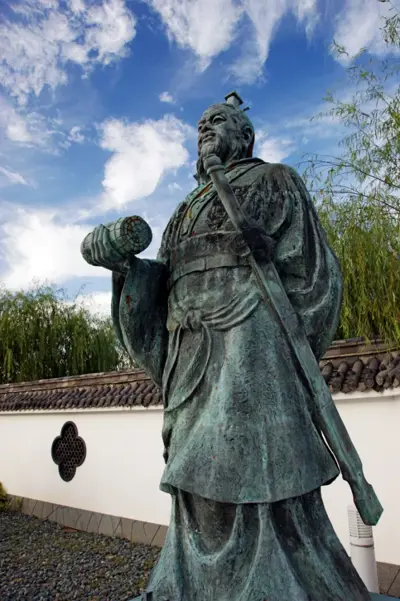
Sun Tzu was a Chinese general, military strategist, writer, and philosopher who lived in the Eastern Zhou period of ancient China. Sun Tzu is traditionally credited as the author of The Art of War, an influential work of military strategy that has affected both Western and East Asian philosophy and military thinking. His works focus much more on alternatives to battle, such as stratagem, delay, the use of spies and alternatives to war itself, the making and keeping of alliances, the uses of deceit, and a willingness to submit, at least temporarily, to more powerful foes. Sun Tzu is revered in Chinese and East Asian culture as a legendary historical and military figure. His birth name was Sun Wu and he was known outside of his family by his courtesy name Changqing. The name Sun Tzu by which he is best known in the Western World is an honorific which means "Master Sun".
