Margaret Mead Quotes
A society which is clamoring for choice, which is filled with many articulate groups, each urging its own brand of salvation, its own variety of economic philosophy, will give each new generation no peace until all have chosen or gone under, unable to bear the conditions of choice. The stress is in our civilization.
Margaret Mead, 1901-1978, Anthropologist, Coming of Age in Samoa, 1928
Sourced by: Eigen's Political and Historical Quotations


The two were cousins. Wilhelm was a very dominant personality and his cousin quite weak. This quotation shows the tyrannical view of the German Kaiser. The letters were secret but after the execution of the Czar, the Russians released the letters to show the dominant and warlike history of Germany under the Kaiser who was furious that the Russians had made such personal and secret letters public.


Penn observed the fact that most American social relationships are not multicultural in that Blacks in a restaurant tend to eat with other Blacks, whites and Hispanics the same. While America has a multicultural and diverse work environment and use of public services, it is still rare to see very integrated churches, social clubs, parties and other social activities. While Penn’s observation is correct, the trend is towards much more socialization on racial, religious, cultural, and geographical basis. There is much more intermarriage than in the past and with integrated families, many of the other social pluralism will follow. It was once thought that intermarriage would be the last barrier to fall and would follow from school, church, and other social integration. However, it appears that it is the other way around.


At the time racism and discrimination in the United States was not only rampant but legal. But change in many substrata of America was detectable and many intellectuals--writers, artists, scientists, educators, theologians, entertainers, groups who would later be called “elites” began to make themselves heard on the subject. Falkner was one whose novels had always taken an anti racist view point and now were overtly calling for political and social change.

This was a common view of Southern leaders. Society had to be monolithic culturally. In the North, the constant immigration from the world over made pluralism much more normative. However, the vast majority of the North opposed slavery and believed that slavery and free labor could not coexist. So the Southern argument on that point was turned on them, and the monolithic views of the South has constantly eroded and become more tolerant and pluralistic and by the 21st century, there were parts of the South that were more tolerant and pluralistic than some parts of the North. Change, reform and liberalism was slow to take hold but it was inexorable.

The strife between the indigenous Fiji people and the Indian immigrants was not as serious when Indian immigration to Fiji began. The immigrants rented land from the natives at good prices and did the hard work of tilling the land. They had a different work ethic and developed the Fiji economy substantially. However, the Indians became more wealthy and better educated. The minority group became equal or dominant in most aspects of Fijian society and inter-ethnic strife and jealousy eventually developed. This became the modern problem of Fiji.

The Islamic leadership of that era came from the East and not Arabia. Theirs was a much more modern form of Islam where the basic values were very similar to those of other major religions. Also, toleration of minorities was an assumed requirement for all. When the axis of world Islamic leadership shifted to the Arab nations, the fundamentalist intolerance ascended and minorities were not only persecuted but were expelled from Arab countries in an effective ethnic cleansing. “Mussalman” was a then common word used in India to denote a Muslim.

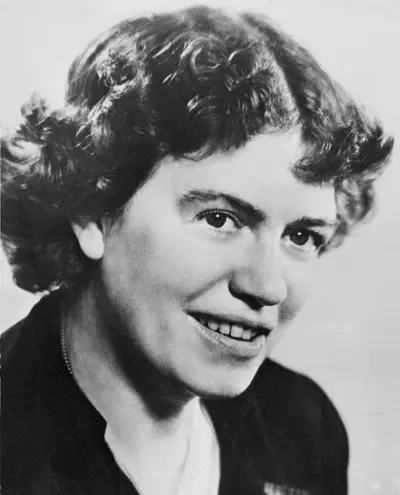
Margaret Mead was an American cultural anthropologist who featured frequently as an author and speaker in the mass media during the 1960s and 1970s. She earned her bachelor's degree at Barnard College in New York City and her MA and PhD degrees from Columbia University. Mead served as President of the American Association for the Advancement of Science in 1975.
