Daniel J. Elazar Quotes
The complex origins of class cleavage in politics are not easily unraveled
Citizen of U. S. & Israel
Daniel J. Elazar, 1934-1999, Political Scientist Secretary of the American Political Science Association, President, Israel Political Science Association, Member, U.S. Advisory Commission on Intergovernmental Relations, Founder and President of the Jerusalem Center for Public Affairs, Minnesota as a Polity -- Minnesota Politics and Government, 1999
Sourced by: Eigen's Political and Historical Quotations


After Roosevelt, most eras of American politics more or less followed the pattern Roosevelt described herein as a “calamity”, with the anger becoming more or less intense. Jefferson thought that these were natural divisions of politics in all societies--{604810}. The thing that masked this for years was race and slavery. In Lincoln’s time there were liberals and conservatives in both parties if race were ignored. In Theodore Roosevelt’s era, he, Taft and others were generally liberal reformers, while a large number of Republicans were conservative supporters of the status quo. Some democrats were radical reformers like William Jennings Bryan while others were arch conservatives. Until 1964 and the Civil Rights Act there were many conservatives in the Democratic Party, but almost all switched to the Republican Party in anger. The Republican conservatives tended to drive the Republican liberals out of the party and for the last part of the 20th century Roosevelt’s “calamity” well described the American political scene, and the anger increased carrying partisan bitterness into the 21st century.


This was his most famous speech.


Eccles had been a wealthy Republican banker before masterminding much of the New Deal economic policies. He was pilloried by many of his fellow wealthy businessmen and financiers.


See Howard Zinn, 1922-2010 {38477} for a later, narrower view with respect to America.


See {633219} and {633221}.

Stalin was then only 26 years old. This was more than a decade BEFORE the Russian Revolution and Stalin was a young left wing revolutionary planning how to bring about a revolution and how the society should operate thereafter. He was then much the youthful, intellectual, Georgian idealist.
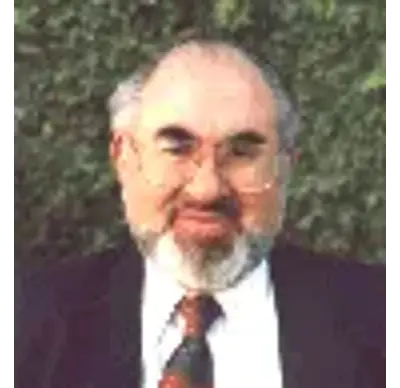
Daniel Judah Elazar was a political scientist known for his seminal studies of political culture of the US states. He was professor of political science at Bar-Ilan University in Israel and Temple University in Pennsylvania, and director of the Center for the Study of Federalism at Temple University and the founder and president of the Jerusalem Center for Public Affairs.
