Vermont Quotes
A school or schools shall be established in each town, by the legislature, for the convenient instruction of youth, with such salaries to the masters, paid by each town…one university in this State, ought to be established by direction of the General Assembly
Vermont in some respect was far ahead of much of the rest of the country when it came to education. There was no such requirement in the U. S. Constitution which NEVER even mentioned education.
Vermont, Article XL, Constitution of Vermont, July 8, 1777
Sourced by: Eigen's Political and Historical Quotations

The organization was initially called the National Negro Committee. The following year the name was changed to the National Association for the Advancement of Colored People. Note that at the time, even for Blacks, the concept of desegregation was so far from reality that their efforts were simply to have segregated schools with the same resources as the white children had. The “separate but equal” doctrine was the method of the segregationists.


This plank if ever actually implemented would clearly destroy the American educational system. Extreme radical ideas such as this are not typical of Libertarian Party positions before or afterwards. The quotation illustrates that there are people in America who would end public education if they could. The quotation also illustrates how a small cadre of people can capture control of a political party and create a platform that is their own personal views which may be different from most of the party members or the historical position that the party has taken. In 1980 the Libertarian Party Vice Presidential Candidate was David Koch, one half of the billionaire conservative Koch brothers. Their money financed the Libertarian Party in that year and David Koch’s views then prevailed in the party platform. Historically, the Koch brothers moved from a minor third party to the Republican party at the beginning of the 21st century when their money was able to help drive the party very far to the right from the traditions of Abraham Lincoln and Theodore Roosevelt.


The phrase “national care and expense” was one that was seen as precedent for those advocating federal aid to education and a strong Department of Education. However, the majority of Adams contemporaries saw education, even public education, as a local matter. The word “education” or “school” never appeared in the Constitution. Adams was well before his time on this point.


Everett was to become the President of Harvard. Private universities had been established by a single religion and typically had professorships of clergy of their religion, but when public universities were contemplated, new thinking was needed in the light of the American Constitution. Madison’s suggested solution is the one that America pursued. Separate the theological seminaries from the public universities.

The Constitution, incredibly enough, never even mentioned education. But at one of the earliest opportunities available to Congress, it made this statement, the first on education by the United States government.

Public schools were a radical idea at the time, but public schools for girls is astounding, especially coming from the clergy. This Cahier was the consensus of the Clergy of Blois in 1789. There were cahiers of several provinces of France—some by the clergy, some by the nobles. What is fascinating is the emergence of many of the pre-Revolutionary French concepts. The example of the American revolution and its principles was known throughout the educated classes of France.

This appears to be the first statewide free public education system available to the poor.

Oliver was a right wing, racist, fanatic and extremist. His quotations are interesting because he often said in public what many right wing extremists only said in private. Paranoia and conspiracy theories were common with the extremists, then as now. In this case, they actually believed that Communists had infiltrated and taken over the 30,000 different school districts in the United States.
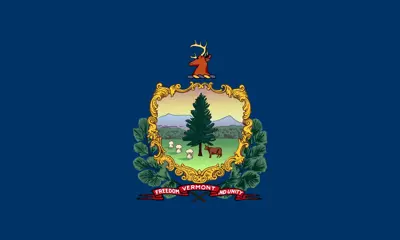
Vermont (/vərˈmɒnt/ (listen)) is a state in the New England region of the United States. It borders the states of Massachusetts to the south, New Hampshire to the east, and New York to the west, and the Canadian province of Quebec to the north. Vermont is the only state in New England that does not border the Atlantic Ocean. Vermont is the second-least-populated U.S. state and the sixth-smallest by area of the 50 U.S. states. The state capital is Montpelier, the least-populous state capital in the United States. The most-populous city, Burlington, is the least-populous city to be the most-populous city in a state.
