John Locke Quotes
… a Roman Catholic believes that to be really the body of Christ which another man calls bread, he does no injury thereby to his neighbor.
when he ingests the wafer at holy communion He was referring to the Roman Catholic communion where the bread wafer is believed to be the body of Christ. This really offended many Protestants who saw it as blasphemous and to many justified their intolerance. And yet, as Locke herein observed, there was really no injury that a Roman Catholic taking communion inflicted on a Protestant who had nothing to do with the Catholic service. Of course, the same logic did not then apply to the Roman Catholic intolerance of Jewish and Muslim religious customs in which they were not involved.
John Locke, 1632-1704, English Political Philosopher, Two Treatises of Government & A Letter Concerning Toleration, 1667
Sourced by: Eigen's Political and Historical Quotations


Not all the relations between Irish Catholic and Protestants were hostile. There was a commonality in their Irish nationality and many protestants—especially the educated and more sophisticated—were opposed to the restrictions imposed by England on the rights of the Roman Catholic to practice their religion. See {639274} for another example.

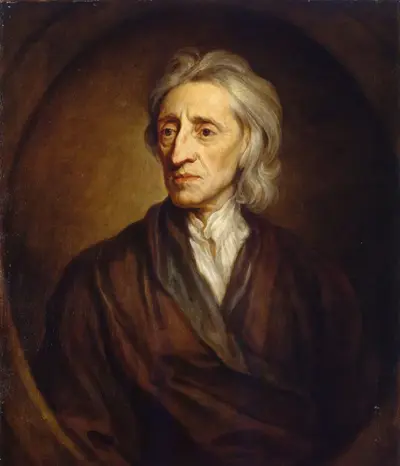
John Locke FRS was an English philosopher and physician, widely regarded as one of the most influential of Enlightenment thinkers and commonly known as the "Father of Liberalism". Considered one of the first of the British empiricists, following the tradition of Sir Francis Bacon, Locke is equally important to social contract theory. His work greatly affected the development of epistemology and political philosophy. His writings influenced Voltaire and Jean-Jacques Rousseau, and many Scottish Enlightenment thinkers, as well as the American Revolutionaries. His contributions to classical republicanism and liberal theory are reflected in the United States Declaration of Independence.
