Murray Rothbard Quotes
A robber who justified his theft by saying that he really helped his victims, by his spending giving a boost to retail trade, would find few converts; but when this theory is clothed in Keynesian equations and impressive references to the 'multiplier effect,' it unfortunately carries more conviction.
Rothbard, Murray N. America's Great Depression. D. Van Nostrand, 1963.


Reference to the British Economist John Maynard Keynes who advocated government action to manage the economy.


It is actually true that public works do create indirect jobs, however the efficiency of indirect job creation is not very good. If the government spends $100 on a public works project half might go to construction materials and the rest pays the salary of construction workers. Part of the materials purchase pay the salaries of workers in the supply chain. And most of the salary gets spent on goods and services which helps to pay other workers and thus jobs are created when there is a public works construction project. However the reason FDR did not want this fact to be publicized is because the economic relationships to indirect jobs is counterintuitive. Many people hearing that public works construction also produces jobs say “Well then let us fund many more government public works programs and create even more jobs—keep spending on projects until there is no more unemployment.” However that is not a sustainable strategy. There is enough benefit in the direct jobs and the use of the public improvement, that it was, in FDR’s view, sufficient without “selling” the indirect job creation picture.


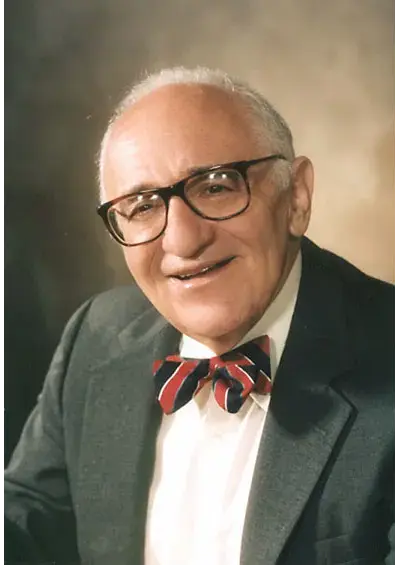
Murray Newton Rothbard was an American heterodox economist of the Austrian School, economic historian and political theorist. Rothbard was the founder and leading theoretician of anarcho-capitalism, a staunch advocate of historical revisionism and a central figure in the 20th-century American libertarian movement. He wrote over twenty books on political theory, revisionist history, economics, and other subjects.
