James A. Farley Quotes
A rigged convention is one with the other man's delegates in control. An open convention is when your delegates are in control.
James A. Farley, 1888-1976, Chairman, Democratic National Committee, U. S. Postmaster General, Quoted in Convention and Election Almanac, NBC, 1964
Sourced by: Eigen's Political and Historical Quotations

of the two party system


Kennan was then the Charge of the America Embassy in Moscow.


Indeed Senator Thomas Collier Platt, in cooperation with major New York corporations, was leading just such an effort. See {624063}. However, many close friends and supporters wanted him to do for the national ticket what he had done for New York—reform. These schemes succeeded beyond the proponents’ wildest dreams when President McKinley was assassinated, and TR was the President. His enemies however were crestfallen—Party leader Thomas Collier Platt was very distressed. See {585078}.


1st Earl of Beaconsfield


In the spring of 1800 New York State legislators were elected. The legislators were then to choose the presidential electors. If New York's electors voted for Jefferson he would likely beat the Federalists, who had just lost their majority in the legislature. Alexander Hamilton wrote to fellow Federalist Governor John Jay proposing to have the sitting legislature change the law to select Presidential electors by popular vote:


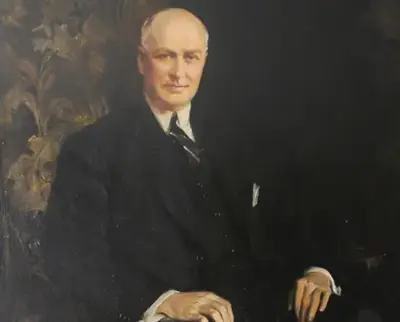
James Aloysius Farley was an American politician from New York. A member of the Democratic Party, he was one of the first Irish Catholic politicians in American history to achieve success on a national level. He simultaneously served as chairman of the New York State Democratic Committee, chairman of the Democratic National Committee, and Postmaster General under the first two administrations of President Franklin Roosevelt. A business executive and dignitary and a Knight of Malta, Farley was commonly referred to as a political kingmaker, and he was responsible for Roosevelt's rise to the presidency. Farley was the campaign manager for New York State politician Alfred E. Smith's 1922 gubernatorial campaign and Roosevelt's 1928 and 1930 gubernatorial campaigns as well as Roosevelt's presidential campaigns of 1932 and 1936. Farley predicted large landslides in both, and revolutionized the use of polling data.
