John Foxe Quotes
A prisoner in the Inquisition is never allowed to see the face of his accuser, or of the witnesses against him, but every method is taken by threats and tortures, to oblige him to accuse himself, and by that means corroborate their evidence
This “primitive method” of questioning is very similar to that preferred by modern intelligence and counter-intelligence experts. See School of the Americas, “Handling of Sources,” Training Manual, 1989
John Foxe, 1517-1587, English Historian, Book of Martyrs
Sourced by: Eigen's Political and Historical Quotations


Under torture many people will tell their interrogators what they want to hear --- accurate or not.


After the assassination of Egyptian President Anwar Sadat hundreds of Egyptian religious fundamentalists were rounded up, jailed and tortured. al-Zawahiri broke under torture and revealed the names of some of his anti-government associates. Although he was not personally involved in the murder of Sadat, he served three additional years in jail. Motivated by has thirst for revenge at his torturers and his guilt at having been forced to betray his friend, he learned all he could about terrorism from the older Jihadists also in the same jail, and when he was released he elevated Islamic terrorism to another level by developing a strategy for the use of suicide bombers.

Ingersoll was considered to be the greatest orator and political thinker of his day, but his overt atheistic views curtailed his elected political career.


After King Henry VIII left the Roman Catholic Church and adopted Protestantism, English Protestants were in great danger in Catholic Europe. Queen Elisabeth I, with its traditional trading partners in Catholic Europe too dangerous for English merchants, negotiated successfully with the Ottoman Empire Sultan Murad III, for mutual trading. An Englishman was much safer in the Islamic world than he was in Europe. Not only did England open up new markets but its merchants developed the skills of trading with the East which was one of the main factors allowing them to be so successful in establishing the British Empire which was always fundamentally a trading empire. Elizabeth’s successful foreign policy not only allowed prosperity despite the schism with Europe, but established the foundation for England to become the greatest world power.


The King, a religious exremist fanatic, was a great supporter of the Inquisition whose excesses were horrible during his reign.


This edict gave great support to the Inquisitors of all Catholic countries. See {617572}

The George W. Bush administration had issued a memorandum to key Federal Agencies stating that certain types of torture were legal—a finding that was quickly repudiated after Bush and VP Cheney—who was a leading force for allowing torture of terrorism suspects—were out of office. But Bush had told the American People and the World that the United States will not torture any prisoners. The dilemma was “solved” when someone came up with this euphemism.

Both Puritans and Quakers were persecuted and physically abused in England by the Anglican Church. The Puritans as soon as they became dominant in part of the American colonies began persecuting Quakers. The Quakers who were the majority in the Pennsylvania colony, however were tolerant of other religions. This history was another of the many reasons the Founding Fathers wanted no established church. A “scorpion” was a type of whip that was particularly painful.
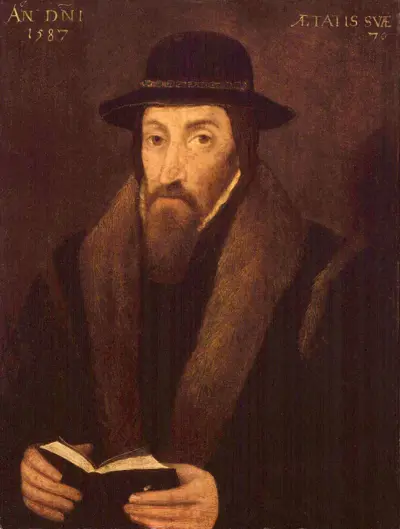
John Foxe, an English historian and martyrologist, was the author of Actes and Monuments (otherwise Foxe's Book of Martyrs), telling of Christian martyrs throughout Western history, but particularly the sufferings of English Protestants and proto-Protestants from the 14th century and in the reign of Mary I. The book was widely owned and read by English Puritans and helped to mould British opinion on the Catholic Church for several centuries.
