Cesare Beccaria Quotes
The torture of a criminal during the course of his trial is a cruelty consecrated by custom in most nations. It is used with an intent either to make him confess his crime, or to explain some contradiction into which he had been led during his examination, or discover his accomplices, or for some kind of metaphysical and incomprehensible purgation of infamy, or, finally, in order to discover other crimes of which he is not accused, but of which he may be guilty
Cesare Beccaria, 1738-1794, Italian Philosopher, Essay on Crimes and Punishments
Sourced by: Eigen's Political and Historical Quotations


Major Fleener had been assigned to defend accused terrorists who were being held at the military prison in Guantanamo, Cuba. For several years they were held without a hearing or trial. Then the U. S. Supreme Court ruled that they had to be given a hearing or trial. A Military tribunal was selected. The methods and procedures of these hearings came under much public world-wide criticism as they did not meet the normal legal standards of most countries. Surprisingly, one of the military officers made public statements criticizing the army and the trials.

Named after penal reformer Johne Howard, 1726-1790. Howard Associations have since been organized in many countries.


The capital punishment debate was raging in Europe. Belgium and parts of Switzerland had just abolished the death penalty.


It is surprising that these ideas would come from one of the most autocratic powerful monarch in the world at the time. However there were many very liberal influences on her from Europe. This set of proposals she even sent to Voltaire to get his feedback and criticism. As late as 2006 the American President was reluctant to outlaw torture for terroristsand the Vice President actually argued for its retention as an interrogation technique. Over 300 years earlier the autocrat of Russia argued against it.


Earlier in the manual, the illegality of such techniques is stated. Later there are suggestions for the use of duress. See {597790}


He was finally brought to justice after being protected by the right wing for many years. He was sentenced to 25 years in prison. See related quote.


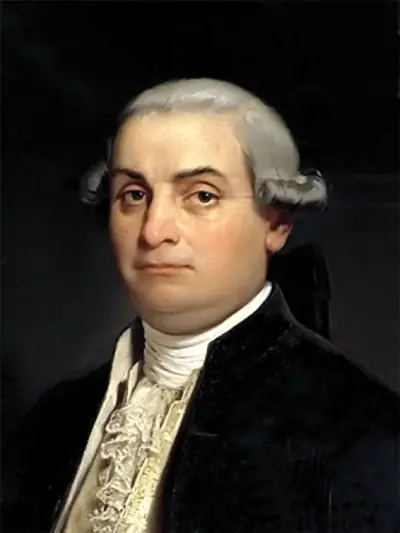
Cesare Bonesana di Beccaria, Marquis of Gualdrasco and Villareggio was an Italian criminologist, jurist, philosopher, and politician, who is widely considered one of the greatest thinkers of the Age of Enlightenment. He is well remembered for his treatise On Crimes and Punishments (1764), which condemned torture and the death penalty, and was a founding work in the field of penology and the Classical School of criminology. Beccaria is considered the father of modern criminal law and the father of criminal justice.
