John Allsebrook Simon Quotes
A member of either House who joins the armed forces, must in the main be his own judge as to what is proper and appropriate. No-one can restrain a member for doing his full duty as a member of the legislature, and he is under no reproach for doing so. Of course if he offers to take active military service and is accepted this must be some restraint upon his political activities, but how much is I think, for him to say.
American Congressmen had a similar problem in WWII. See {608511}.
John Allsebrook Simon, 1873-1954, 1st Viscount Simon, British Chancellor of the Exchequer, Advice to William Francis Hare regarding the ethics of a member of Parliament joining the armed forces in times of war
Sourced by: Eigen's Political and Historical Quotations

After voting for conscription in World War I, the Congressman, who had flying experience himself, took a leave of absence from the Congress and flew for the Army in Europe. Political opponents at home petitioned to have his congressional seat declared vacant on the grounds that the district must have current representation in Congress:


This Biblical quotation has been used to justify and legitimize military conscription.


Monroe was then Secretary of State and the U. S. was at war.


Mao began by quoting Clausewitz's famous dictum.

Theoretically every male citizen was supposed to serve in the Militia at that time. But if one did not, the penalty was a small fine. It became a status symbol. Those middle and upper class men who could get commissions as officers would serve, but those who did not have the political connections or the money to equip his own troops, would rather pay the fine than serve with men he thought beneath him. There is a , romantic American myth about the Militiamen in Colonial and Revolutionary America—the citizen soldiers who would leave their farms and rise to the military necessity of the day. However, not only were the militia very hard to muster to duty, but most actually didn’t own or have experience with firearms, and the prevailing opinion of knowledgeable military leaders from George Washington on down was that the militia were not very good soldiers. See {613015}, {613016}, {613022}, {613027}, {621987}, {621988}, {613030}, {613033}, & {613056}


Many of the young men who were given this form to fill out, had never been in Japan and some did not even know there was an emperor there. Nonetheless the Japanese American divisions of enlistees were the most effective and most decorated fighting units for America while their parents who had not been born in America were still imprisoned in the internment camps. See {624010}.


“There” referred to the new American Colonies. He was advocating mobilizing the poor and destitute of England and sending them to America to provide manpower for a needed workforce and to be soldiers in the event of wars. The poor have historically been used indiscriminately for military manpower needs until Post WWII America where the military technology began to require minimum standards of intelligence and literacy. With the all volunteer military and higher standards, the majority of the military in America has been from the lower socioeconomic classes.


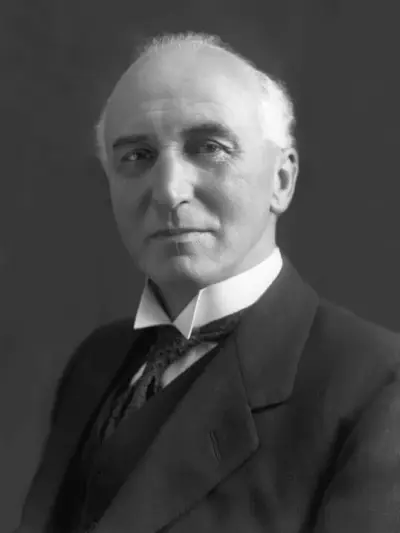
- Born: February 28, 1873
- Died: January 11, 1954
- Nationality:
- Profession:
John Allsebrook Simon, 1st Viscount Simon, GCSI, GCVO, OBE, PC, was a British politician who held senior Cabinet posts from the beginning of the First World War to the end of the Second World War. He is one of only three people to have served as Home Secretary, Foreign Secretary and Chancellor of the Exchequer, the others being Rab Butler and James Callaghan.
