Georges Bernanos Quotes
A large number of suspects, both men and women, escaped martial law for lack of any shred of evidence against them on which a court-martial could convict. So they began setting them free in groups, according to their birth-place. But half-way, the car-load would be emptied into a ditch.
Bernanos, Georges. A Diary of My Times. Translated by Pamela Morris, Macmillan, 1938.

Mensheviks were the opposition political party to the Bolsheviks. Lenin used Ethnic Cleansing and deportation to gain control of areas where Mensheviks had and established following. It was so ruthlessly effective, that shortly thereafter the Mensheviks were no a significant force and the entire country was Bolshevik. Today, few people even know what a Menshevik was.

The U.S. was at war with Spain and Filipino insurgents for the control of the Philippines. During this war there were a few senior U. S. Officers who in later times would have been tried and jailed for war crimes. The men under them were brutal and committed atrocities at their orders. See {615368}.


Hissine Habre was the President and Dictator of Chad. He was one of the worst war criminal and murderer in the world. He and the other DDS policemen and agents were trained by the United States.

Saloth Sar Pol Pot. He was responsible for the brutal killing of over 1 million of his own people.

The reference to “hanging the Irish” referred to the attempted French invasion of Ireland with Irish Roman Catholic complicity. The English went on a campaign of terror {639231} and there were many hangings such as {639272}.

This is an excellent example of a theme that has been used since biblical times to justify massacres by military men. Namely that if the first town that you conquer is treated terribly enough, the word will get around and the next town the people will pressure their military to surrender to avoid the same fate. Therefore, they argue, as Ludlow does, that the massacre will reduce future violence. That perverse ethical logic has lasted for a long time. However, that was not the only motive here—vengeance was a major factor. This is another good example of the fact that many of the worst moral atrocities of men were perpetrated and led by men who thought that there were being moral and consonant with God’s will. See {639301} for Oliver Cromwell’s description of the massacre.


About 2000 Irish were slaughtered while Cromwell only lost 64. In the Irish Rebellion of 1641, many English Protestants—men, women and even children were massacred by Catholic rebels who were out of control of their leadership. See {639336} for an example. Cromwell, when he landed in Ireland with his troops, made no bones about the fact that he was there to avenge the massacres of 1641 {639283} . This was his first “payback”. 150 years later the Irish Protestants memorialize the massacres of the Rebellion of 1641. The Catholics, memorialize, the massacre at Drogheda. Each group uses these and other similar events to justify their positions of antagonism against the other. See {639282} for a moral analysis of Cromwell’s action here.
This is a description of a massacre of Protestants (mostly English) by Catholic Rebels led by Phelim O’Neill. The Catholics whose religion had been compromised when English King Henry VIII severed all ties to the Pope and the Vatican and bound the Irish to that decision of his. The Irish Catholic peasants so resented the English that their hate caused massacres like this in the Irish Rebellion of 1641. Their anger was so great that Phelim O’Neill and his officers lost control of their troops who were bent on revenge.
These battles with the Irish—in this case the MacDonnell clan—were brutal atrocities where the winners of the battle killed all the losers and the women and children with them in the case of the Irish.
The assassination was attempted in 1944 and after its failure, he was shot be a firing squad.

Lawrence of Arabia. In the Middle East, Lawrence led a small Arab army against the Turks and the Germans. In a battle near Tafas, the captured 250 Turkish and German soldiers as prisoners. They them shot them all in cold blood with their Hotchkiss machine gun. What makes this quotation so significant is that one of the great British heroes of WWI was actually guilty of War Crimes. An American journalist gave Lawrence and his exploits great publicity without mentioning the atrocities. The British chain of command also ignored the transgression of one of the most fundamental rules of war even though the clear evidence was in basic battle report files. However, the British never removed the report from the files or destroyed it. The Turks and the Germans while they respected the rules of war with the English, French, and most allies, treated the Arabs much more harshly and murdered Arab prisoners on many occasions. In part this atrocity at Tafas was an act of vengeance and retaliation. But Lawrence never even tried to explain it.


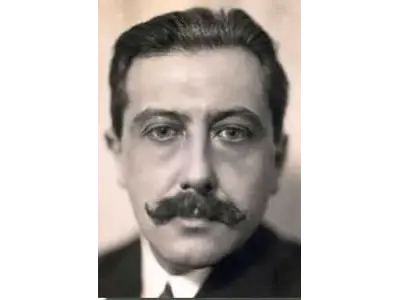
Louis Émile Clément Georges Bernanos was a French author, and a soldier in World War I. A Roman Catholic with monarchist leanings, he was critical of elitist thought and was opposed to what he identified as defeatism. He believed this had led to France's defeat and eventual occupation by Germany in 1940 during World War II. His two major novels "Sous le soleil de Satan" (1926) and the "Journal d’un curé de campagne" (1936) both revolve around a parish priest who combats evil and despair in the world. Most of his novels have been translated into English and frequently published in both Great Britain and the United States.
