Henry W. Davis Quotes
… a hermaphrodite government, half military, half republican, representing the alligators and the frogs of Louisiana
Abraham Lincoln had attempted to hold elections in Louisiana. The congressman was opposed to any executive office policies on reconstruction not passed by Congress.
Henry W. Davis, 1817-1865, U. S. Congressman (American Party & Unconditional Unionist, MD), House debate, and February 15, 1865
Sourced by: Eigen's Political and Historical Quotations

This quotation is a classic example of the type of deal making that President Johnson commonly engaged in.

Bragg and other Southerner leaders had an unusual concept of equality. Ever since the original Constitution, Northerner’s votes counted for themselves only while a single Southerner’s vote counted for all his slaves as well. So the individual Southerner always had more political power than his Northern counterpart. However, this notion of equality reached it’s acme when it came to the new territories. The Southern argument was that Southerners could not equally prosper in the new territories of Kansas and Nebraska if they could not bring their slaves to work the land. The thought that Southerners were equally able to personally work the new lands or pay labor seems to never have occurred to them. If Northerners could prosper that way then Southerners should be equally able to do so also. However, many Southern whites simply could not conceive of a “gentleman” working in the fields. Therefore they would not be equally able to prosper in the new territories.


At the beginning of his Presidency Roosevelt urged Congress to disarm. A few years later he was urging heavy expenditures for armaments and Congress was then reluctant.


She was shot in the head in a mass shooting which killed one of her closest staff members, She made a remarkable recovery and rehabilitation but decided to resign so she could devote her energy to her rehabilitation. After Congress she did that and gave her effort to Americans for Responsible Solutions, an organization to try and reduce mass shootings.

There is frequently a disagreement between the military and civilian leaders just as there are disagreements among most political personnel. Hawks, and people who have had experience in the military tend to think that military advice on military matters should be determinative with the President and Congress. Others tend to believe that military advice should be considered, but if it were always adhered to, there would be no point in having civilian control over the military. See {639667} for an example of when military leadership advice prevailed and it was a mistake.

Abrams has a cynical view of government and his string ideology and abrasive style tended to create a lot of enemies for him. Many disagree with him, and especially many presidents. A president who has a member of his cabinet who is an “enemy” and retained him in office would be a very weak and foolish President.


At that time Brown’s Republican Party was dominated by extreme conservatives who tended to attack the character and motivation of anyone who did not agree with them—including members of their own party. Brown however came from a state with a strong Republican tradition of liberalism, which however then had a majority of Democrats as most of the liberal Republicans had been driven out of the party by the Republican extremists. At the time, the Republican party had become so extremist that many thought him disloyal to the part for making this statement. The Tea Party credo then as good people do not support evil and immoral policies and they tended to see almost all policies in moral and ethical terms.

He lost the vote on this issue, and the Congress created the first committee to investigate and oversee military affairs.

This slogan was used by the Know-Nothing Party because they would rather continue to accept slavery than plunge the nation into a civil war.

Although chief executives of most other countries are commonly abused in the national legislature, Mexico had no had a serious opposition much less public derision of the President before then.
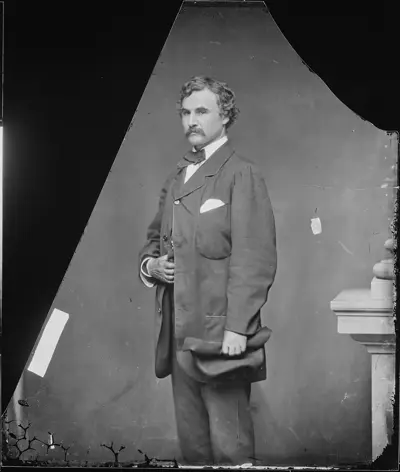
Henry Winter Davis was a United States Representative from the 4th and 3rd congressional districts of Maryland, well known as one of the Radical Republicans during the Civil War. He was the driving force behind the abolition of slavery in Maryland in 1864.
