Nostradamus Quotes
A greater persecution shall befall the Christian Church than has ever been in Africa, and will last until the year 1792, when there will be a revision of centuries.
Nostradamus. "Epistle to Henry II." The Prophecies, translated by Richard Sieburth, Penguin Classics, 2012.


The implication of a double moral standard for adherents of the faith and for others has been characteristics of many religions.

Toleration is a relative term. The Muslim Moors made Christians (and Jews) pay a special tax. At times they were forced to wear special clothing so that they could be readily identified. And they could not build churches larger or taller than the smallest mosque in the community. At times, their occupations were restricted but at other times Christians and Jews were appointed to the highest positions like Vizier. The Inquisition, in contrast, forced all Muslims (and Jews) to leave the country without any of their property or money or be tortured and killed—usually by burning at the stake unless of course that they converted to Christianity.


In one of the historical ironies of the 12th century, a Christian sect preferred the rule of the Muslims than their Christian brethren—on the grounds of religious tolerance. It illustrates the changes that take place over time. By the 21st century, it was the Christians who were thought of as tolerant and the Muslims as the opposite.


What the historian did not know was how similarly the Protestants would behave against the Catholics when they had the power. Since the Catholics were the established church, and the Protestants the new “heretics” the Protestants were on the receiving end of most of the atrocities at the beginning. However, as if they had been scholled by their horrible experiences, they repeated them just exchanging the perpetrators and the victims.
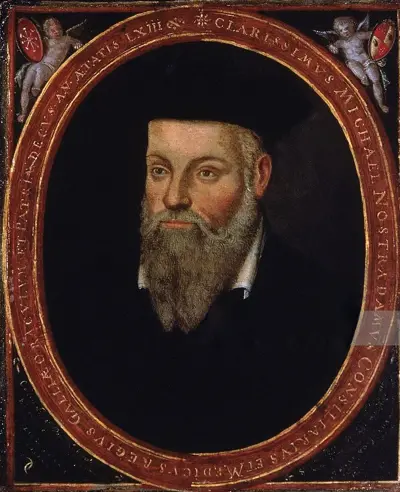
Michel de Nostredame (December 1503 – July 1566), usually Latinised as Nostradamus, was a French astrologer, apothecary, physician, and reputed seer, who is best known for his book Les Prophéties (published in 1555), a collection of 942 poetic quatrains[b] allegedly predicting future events.
